Q: It’s wonderful that you’ve found ways to bring the whole child into the experience of learning. You mentioned the field trips, and how they have positive lessons for the kids and their teacher.
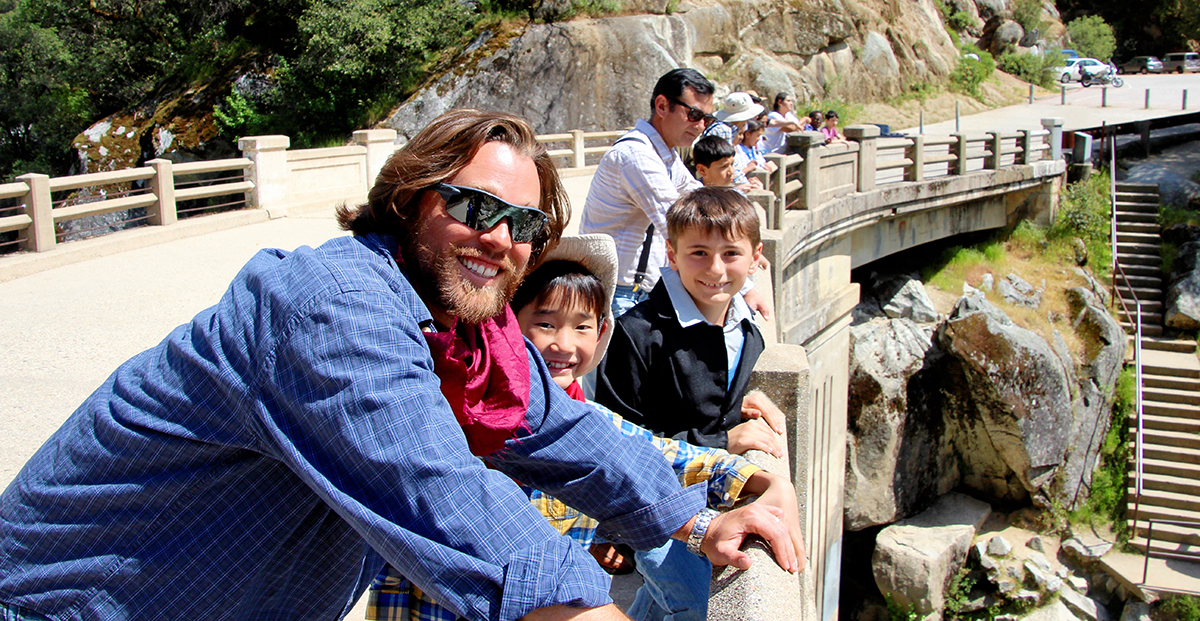
Craig: Before COVID, we would go to the Malakoff Diggins, a gold mining area in the Sierra Nevada mountains of northern California.
It was exciting for the kids, because we were studying the California Gold Rush from 1848 to 1853, and the Malakoff Diggins were part of that era in California’s history.
Before the trip, the kids would read The Great Horn Spoon, a book that tells how countless immigrants came to California from all over the world in search of a better life.
The kids could choose another book from a list I gave them. The idea behind reading about the Gold Rush was that we wanted them to imagine they were a person who had come to California in the 1800s, and to enact the character during the trip.
The Diggins are in the remote mountains, twenty-five miles from the nearest town. It’s like traveling back in time to a world where there are no cars or phones.
They would create a story for their character, based on their reading, and before we left they would give a presentation to introduce their character to the class. They would tell who they were, where they grew up, and how they had set off on the great adventure, leaving their family behind to seek gold in the faraway mountains of California.
The kids gave their presentations dressed as their characters, and they would tell how excited they were to set out on the long, hard journey.
Then we would leave for the mountains, just as their characters had, and they would become the character and have a grand adventure in the Gold Country.
The Malakoff Diggins are a state historic park, with restored buildings from the Gold Rush era, so it feels authentic, as if we were living at that time. No one lives there now but the park rangers, and it was like an Old West town from the movies.
We had a fire pit and four canvas tents, so we were sleeping under the stars without modern conveniences. There was no heat or electricity, but we had our sleeping bags and plenty of food.
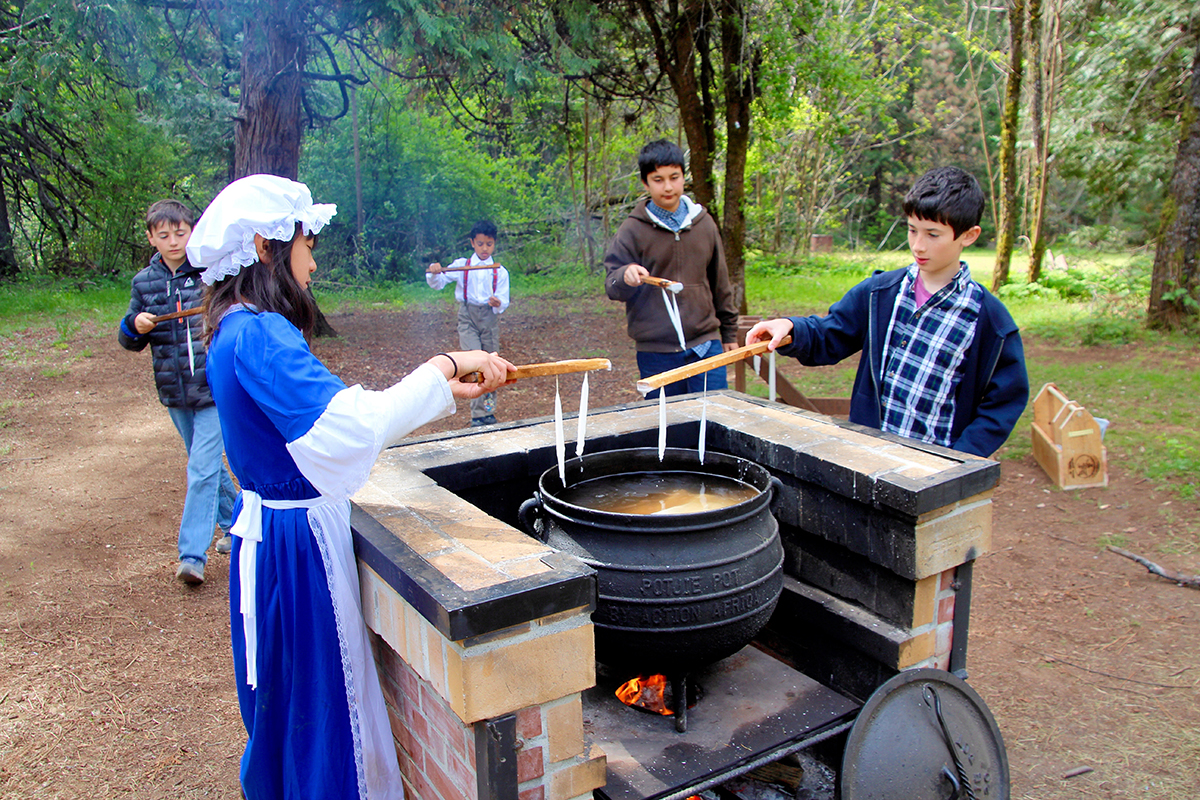
I planned their activities with the park rangers in advance so they would have lots to do. They learned skills their characters would have known 150 years earlier – making cloth dolls, braiding ropes, dipping candles, and panning for gold. We wanted them to be fully occupied and feel that they had truly traveled back to the Gold Rush time. It was lots of fun for the kids to be living in a place that looked like the set of a Wild West cowboy movie.
A blacksmith friend of ours lives nearby, and he would bring his forge and invite the kids to help him make small items they could take home as souvenirs, like old-time forged hooks.
Q: Was it a first-time experience for the kids to go camping in the mountains?
Craig: For many of the kids, it was the first time they had slept away from home, so it was definitely a rite of passage, to learn that they could have fun being away from their families for two nights, while being outdoors most of the time.
On our first field trips with the fourth and fifth graders, years ago, I let some of the parents come along, but I stopped doing that when I realized that they were often coming out of fear instead of to help.
It wasn’t helpful to have them on the sidelines, watching anxiously to make sure nothing bad would happen. It just created chaos, and the parents often had no idea about camping – they didn’t even know how to blow up their sleeping pads.
We had a field trip where it started raining, and the parents left early with their kids. It would have been an excellent experience for the kids, to learn to use their creativity and work together to stay warm and dry and have fun even while it was raining.
Having fearful parents with us created a thwarting energy that made things more difficult for us all, so from then on I would only invite parents if I felt they would contribute with positive energy, and I would invite teachers who knew how to contribute.
At Malakoff one year we woke up with two inches of snow on our tents. The firewood was wet, and we had a hard time lighting the camp fire. The kids were shivering, so we went on a hike and held hands, and when we came back our hands were warm and the fire was going nicely.
The field trips give them opportunities to deal with situations that might be unfamiliar, uncertain, uncomfortable, and surprising. They learn that by teamwork and by staying calm, they’ll be fine.
It gives them an experience of how they can overcome challenges, because there won’t always be an easy solution. You might have to take a vigorous hike to get warm, which might not be your first choice when you wake up and climb out of your sleeping bag into a cold morning outdoors. But it might be the only thing you can do, to avoid standing around shivering.
We like to put them in real-life situations where they have to figure out a solution together. It contributes wonderfully to their overall experience of school, and they return from the field trips feeling happy, confident, and bonded.
When we began the field trips, we would schedule them early in the school year, but I noticed that I was exhausted after those trips, because there was so much going on at the start of the year, and managing the details of the field trip was an added burden.
Also, at the start of the year I hadn’t formed close bonds with the new kids, so there might be problems with them understanding what was expected. It’s why we moved the field trips to the spring, when the kids had developed better skills of communication and behavior, and they would be able to trust the process and listen and behave in ways that would keep them safe and happy.
When we return, they always write with deep feeling about the trip. They often add wonderful poetry to their writings, and they’re excited to share stories and reminisce together.
I’ll hear them talking, and they seem older, more confident and mature after learning from their experiences and finding solutions to the challenges.
Q: When kids come new to your class, is there a period of adjustment? What are their first months like?
Craig: At this age, it isn’t so much about learning specific skills, the way the kindergarteners need to learn the right words and behaviors. In fourth and fifth, it’s more about learning to put out high energy throughout the day.
When a new kid joins us, I’ll get the fifth graders to help them, because they’re familiar with what I’m asking of the class, and they enjoy supporting the new kids and helping them adjust.
The older kids know how much energy I’ll be asking of them, and they enjoy helping the younger ones raise their energy and become their best self throughout the day. The older kids enjoy the feeling of serving as leaders and helping the younger ones learn how capable they can be.
Q: The other teachers say that the kids love having rules, schedules, and boundaries. When kids enter your classroom, what do they need to know? Is it the schedule, or how to behave, or how to be enthusiastic? Can you talk about the “rules” in fourth and fifth grades?
Craig: I think of it as being fully aware in the present moment throughout the day, and participating in each moment by being yourself within the principles of expansive behavior and self-control.
To join in the flow of high energy and focus, you have to feel safe to open your heart and be who you are. You have to feel safe enough in the environment to contribute freely and creatively – and before you can contribute and be creative, you have to have certain specific needs met. Because we know this, we’re always taking time at the start of the day to create a strong, positive, joyful atmosphere for learning.
I’ve described our morning, but I’ll review it here again in the context of how it helps create a strong, positive, harmonious, engaging and inviting learning environment.
The kids arrive at 8:30. When they come into the classroom, they can spend the first 15-30 minutes reconnecting and finishing their homework. It’s a quiet time to settle the energy in the classroom before we go for a walk.
The purpose of the morning walk is to take care of the physical body, so that when I ask them to be still and use their minds in math class, their bodies won’t be shouting at them to go outside and play.
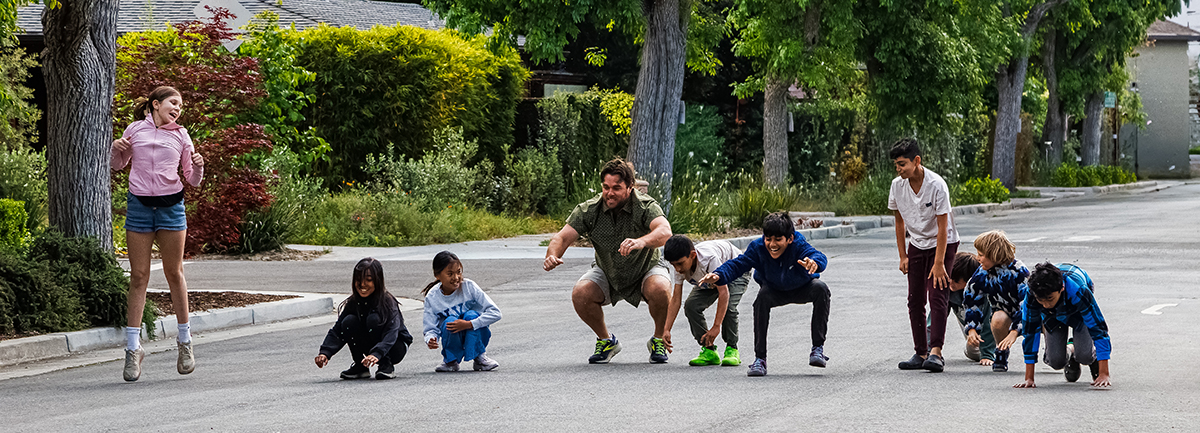
At the start of the walk, I give them time to connect and have some social time together, then we’ll start doing some stretches, lunges, twists, scoops, skips, butt-kicks, high knees, and bounding duck walks.
It’s lots of fun, and when we’re finished, their energy and willingness have increased dramatically.
The body is happy, but they’re starting to be a bit tired from moving, and sitting still sounds amazing.
We’ll sit and meditate at the end of the street, where the birds and squirrels are making lots of noise, like a crazy morning symphony to greet the day.
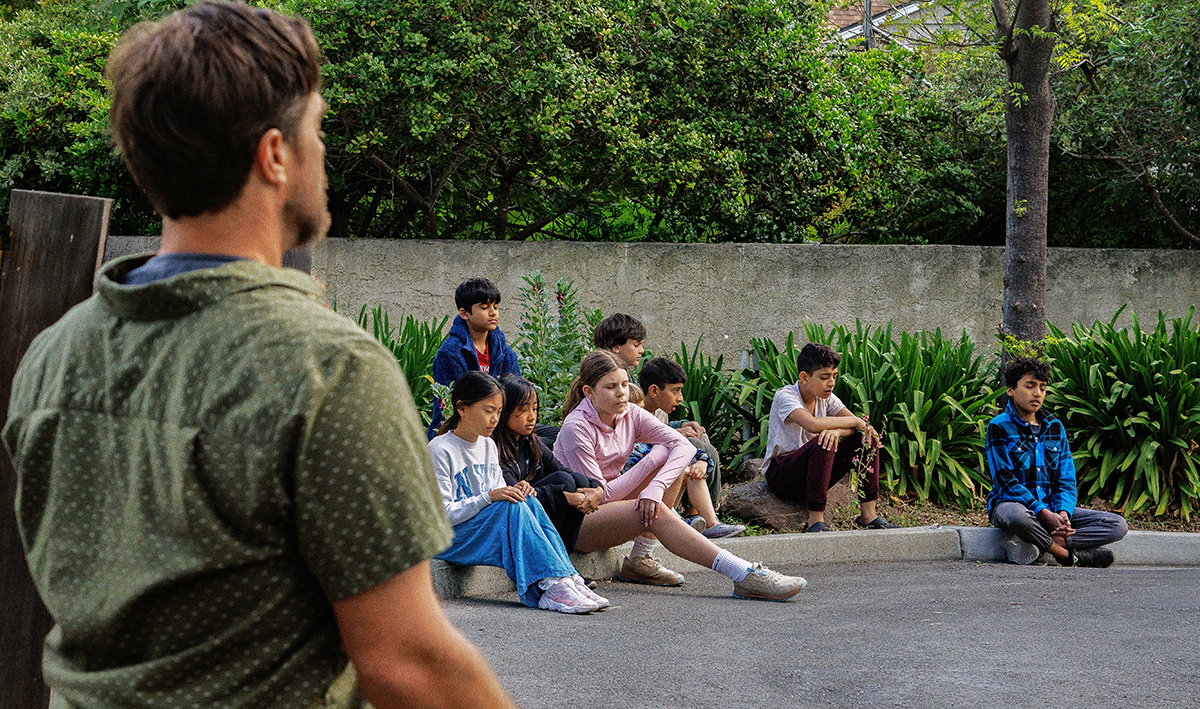
It’s a wonderful place to close our eyes and listen to our breathing, and tune in to the sounds of nature.
It’s very calming, and at that point it’s something that feels very sweet to do. It isn’t that we’re meditating because the teacher is telling us to, it’s something that feels natural and pleasing after moving hard.
After we’ve meditated and relaxed with quiet appreciation and stillness, we’ll start back to the classroom, and it feels like a celebration, because they are energized and harmonized and happy.
Now we’re almost ready to start doing math, but first we’ll play a bit more together, and we’ll do it through music.
Music is a wonderful way to harmonize our qualities, our energies, and our feelings. Each kid is unique in their nature, and where their energy is on a given day. Playing and singing together sets a pattern of energy and harmony for playing our individual roles during the rest of the day.
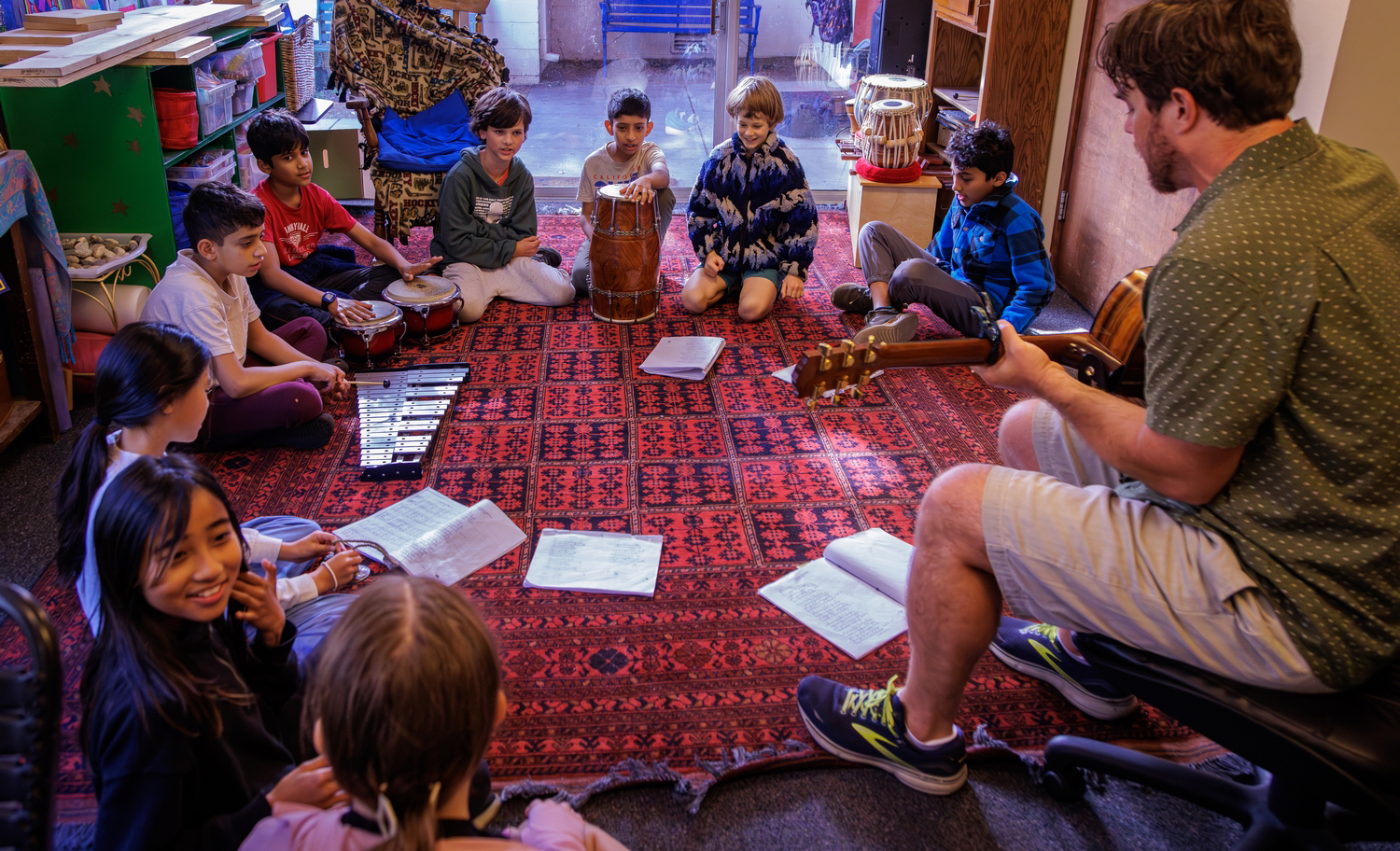
Each one will contribute something unique, whether it’s by singing, playing guitar, or moving to the music. We’re all singing because it feels wonderful. It’s raising energy upward in the body, and they can participate by singing or playing drum, xylophone, guitar, etc.
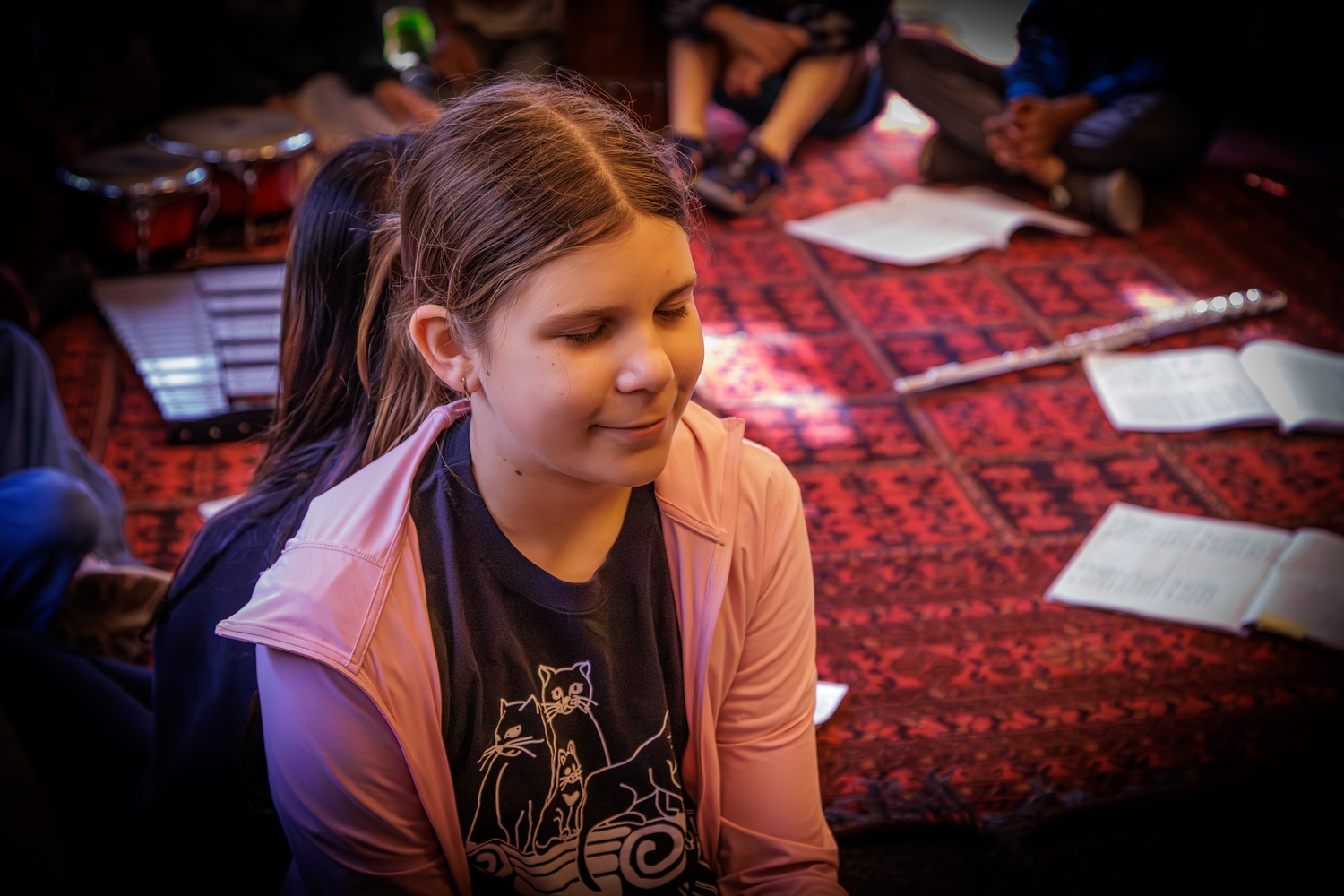
They’re learning the notes of new songs, and most of them can’t do it by looking at sheet music, so they’ll try to play it by ear and work out the notes by how they sound.
For the first weeks it will be a crazy chaotic sound, but once they begin to understand the musical scale and whether the notes are telling them to move their fingers left or right to make a lower or higher sound, they will gradually begin to be able to picture how far away the right notes are.
After music, we’ll have a short meditation, then we’ll chant Aum together, which helps them hear where their voice is placed, and match and blend their notes together with the group.
Our morning music is simple, but it helps with their music classes, for example choir or guitar. It helps them discover how enjoyable music is, as it becomes easy and fun.
Once they begin to understand their instrument and they’ve memorized the words to the songs, they’ll often want to stand and create movements or act out the lyrics.
A good example is a song by Swami Kriyananda called “If You’re Seeking Freedom.” It’s special because it’s vigorous, rousing, and it carries a wonderful message.
It tells us about the things we can try to do in our lives that will never actually end up giving us happiness and freedom. The kids have a play that they perform while they sing it, where each one has a part and they’re standing and telling the story with intense energy, to a point where it raises their spirits for the rest of the day. It’s a cheerful, positive song, and it makes them happy and excited to be singing and acting it together.
If You’re Seeking Freedom
by Swami Kriyananda
If you’re seeking freedom
In a revolution,
Oh, if you’re seeking freedom,
You won’t find it there.
For once the guns stop blazing,
You’ll find it amazing
How the world can drag on
Just as before!
If you’re seeking freedom
In a marble mansion,
Oh, if you’re seeking freedom,
You won’t find it there.
For even when it’s sunny,
You’ll be counting money,
Keeping up that showcase,
Your face lined with care!
And if you’re seeking freedom
On a throne of power,
Oh, if you’re seeking freedom,
You won’t find it there.
For though men all obey you,
What if they betray you?
Tense you’ll be, and waiting
For foes everywhere!
But if you’re seeking freedom,
Cast away desires.
Why barter like a beggar?
You’ve wealth everywhere!
For never can you buy it.
Grasp, and you deny it.
Freedom can’t be hoarded:
It’s free as the air!
And if you’re seeking freedom,
Seek it on the mountains,
God’s sunlight on your shoulders,
The wind in your hair.
For there’s no one can hold you,
Boss about, or mold you.
Once your heart is free,
You’ll be king everywhere!
It creates good energy, before we jump into math and for the whole day.
Q: You’re following steps that tend to occur in the same order in many natural processes – first with the body, then as energy begins to flow in the body, feelings awaken and you have energy and enthusiasm to turn your will power toward doing happy, worthwhile things.
It reflects another key idea of Education for Life, where you adapt your teaching to the stage of development of each student. First is the physical years from birth to about age six, then the feeling years from six to twelve, and the teen years from twelve to eighteen.
You’re starting the school day in an order that helps the students access the capacity of their brains in a natural, happy way. Otherwise, their brains are going to be a little frustrated, if they haven’t been energized by moving the body, and they may be lacking the feelings that will give them the desire and enthusiasm to tackle a challenge. So their brains will feel there’s something they haven’t been given, and they won’t feel whole.
Craig: Exactly. By the time we dive into math, we’ve done our full basic morning routine, and the extent to which our physical movement and our singing have awakened our energy and feelings will reflect how exuberantly and intensely they’ve done those practices.
So now we come to math, and a highlight of math class in fourth and fifth grade is an international contest called the Math Olympiads.
Before we take the Math Olympiads test, we may repeat our morning sequence in a short form to be sure our energy is raised and engaged in a special way.
For example, we might turn on some music that is stimulating and energizing, and we’ll turn the lights off and dance in front of our desks, or we’ll go outside and play a silent game of tag, where they’re running and breathing deeply and awakening the body so that when they come back in and sit at their desks, they’ll have energy and happy feelings to work with, and they won’t be tempted to give up easily.
Q: You’re dealing with lots of very individual kids, each with a unique natural approach to learning, and when each one comes to school, they’re probably at a different level of energy than they were the day before.
It sounds like the things you do in the morning to awaken energy and feelings are helping bring them together and harmonize their energies. For example, each one will sing in their own way, but they’re all singing and raising their energy together, and feeling connected and happy.
Craig: That’s true, and as their teacher I feel my role is to read their energy so I can help them go forward starting where they are.
For example, I’ll encourage them to ask questions, and I’ll see where their questions are coming from, and I believe I can help them in the best way if I can be flexible and help them work with whatever they are thinking, as much as possible, instead of always imposing a rigid schedule on all of them.
Their ideas won’t always be right, but I find that it’s often helpful to let them make mistakes, as a first step toward getting it right.
Of course, I have to set boundaries, so I won’t let them ask aimless questions just to get out of doing the work. As long as they’re engaged and interested in finding a solution, I’ll be flexible, but if I notice negativity, apathy, or laziness, I’ll have to push them.
Once you’ve got a classroom full of kids who are having a positive good time with willingness and creativity, learning becomes lots of fun.
In math, for example, there are three groups in our class. Even though they are fourth and fifth graders, in math we have an advanced sixth-grade group, a solid fifth-grade group, and a lower fifth-grade group. I start them all in fifth grade, even if they’re coming from third grade, and I’ll work with the kids who are struggling, and help them get up to speed.
I meet with the groups, and I also meet individually with them once or twice a week to review their progress.
Once in a while, the whole class will participate in a math games environment, where they can stand and move around.
Their desks are facing each other, so there’s an aisle in the middle where they can go and buy and sell goods. They’re negotiating and keeping a general ledger and using pattern blocks as money to exchange for various items that I’ve set out for them.
They learn that because there’s a high demand for the most exciting items, they will have a high price.
They’ll have to wrap up their negotiations and make deals before the time’s up, or pay a monetary penalty.
We want math to be not always about abstract figures that represent numbers. We want them to see how the numbers relate to life. So, for example, I will occasionally let them have fun using plastic pipes to build strange inventions with an imaginary purpose that can help humanity. They’re using math to figure out how to fit the pipes together, and it tends to make math fun and engaging.
Q: When I visit your class, there’s a good atmosphere. If they’re working on math together, there’s a feeling that they are connected.
Craig: I’ve noticed that the girls especially enjoy working together. They seem to learn better by talking about the process. They’ll have an idea, and it seems to help them process their thinking if they can work with a partner. If they don’t have a partner, they’ll often be talking to me, because they need to talk about their thinking in order to put it on the page. Whereas the boys more often seem to want to prove that they can do it independently for their own satisfaction.
I let them work according to their preference much of the time, but I’ll make sure they are completing all of the steps to solve the problems.
When we review the lesson together as a group, I might call on random people, and when I see a mistake I’ll ask them how they came to the conclusion. By talking about their mistakes, they’ll often learn where they went wrong, and they won’t make the same mistake again.
The group reviews of the lessons are mostly about focusing on things we don’t know. It’s where we’re pushing beyond what we’re able to do well. We’re pushing the edges, being honest about what we don’t know and where the mistakes are coming from, because that’s where we will grow.
It gives them a good process for dealing with the mistakes they’re bound to make in other areas of their lives. Maybe it’s social, where we’re on the playground and we’re humble enough to say, “Sorry, I feel like I was wrong.” It’s practice in being honest with ourselves and developing our integrity and vulnerability so we can learn as much as possible by fixing the things we did wrong, and seeing it as a natural part of the process, without wasting energy on fears, regrets, or shame.
Q: That’s a valuable life skill, to learn that mistakes are all right, and that they’re just a valuable step in learning.
It’s like Shawn Achor’s discovery that the most successful Harvard students are not afraid of making mistakes and being wrong. They’re happy to throw ideas in the air and figure out how things work. It sounds like you’re giving kids a head start in that direction.
Craig: I think that’s true. I’ve noticed that when the kids feel insecure and worried about how they might be judged, they don’t contribute, so they may never get to know their own best process for coming to their own conclusions.
What’s my natural way to learn? What’s my learning style? As they begin to feel safe and secure, and they realize that we’re all making mistakes and nothing bad is happening to us, they learn to laugh at the stupidity of their mistakes and have fun with it, because they know that nobody’s going to define them by their mistakes.
That’s when they can really start to be brave and creative and take steps to find the right answer, by asking questions and seeing how often they’ll get the right answer by figuring out how to ask the right question.
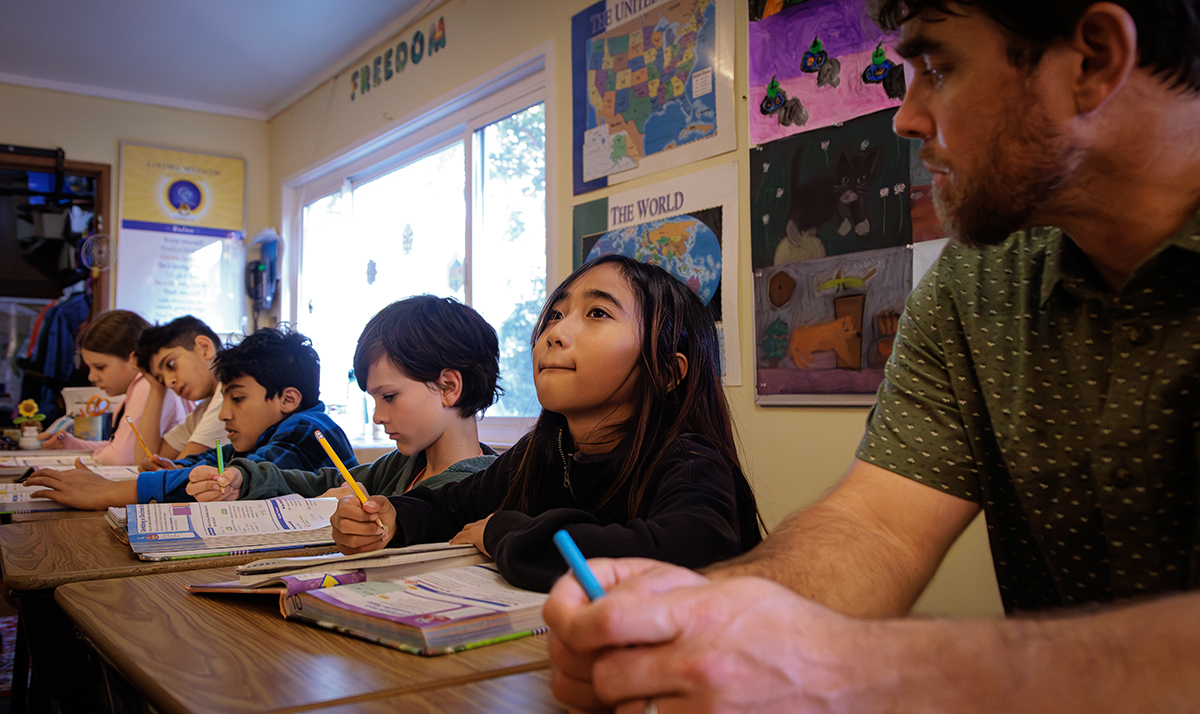
When they feel secure and free from judgments, they enjoy the process of learning. It starts by realizing that they need to start taking action of some kind, and it doesn’t matter if their first question is silly, but you need to ask it to get the energy moving. Then you can keep asking until you can figure out how to solve it on your own.
In the process, you’re taking important steps toward understanding how you, as a unique individual, can think most effectively and find your way to the answer. But if you’re stuck in fear, you can’t go through that process, because you’ll be quiet, and you won’t learn about the process of finding solutions.
It’s huge for them, when they begin to understand how they can work through their mistakes and questions on their own.
It’s a very big part of math class, and it’s why I’m always prodding the kids to start talking and thinking.
The test questions from the Math Olympiad are designed for sixth graders. There’s another test for seventh and eighth graders, so there will be lots of concepts that they haven’t seen, and they’re sure to fail at those questions. But I tell them that it doesn’t matter at all, because it’s not a failure if you play around with a question, and you’ll find out how cool your brain is at finding patterns. The point is that you’ll be able to solve the questions if you take action – if you take a few steps by guessing or playing with the numbers.
Once you start to figure it out, you may find that you enjoy problem-solving, and you might develop a love for math, just because you started playing with the ideas.
I don’t give them the solutions, but I’ll give them the same test the next day, and sometimes I’ll call on kids, knowing they don’t have the right answer. I’ll say, “What were the creative things you did with this question?”
They’ll walk us through their thinking and what they wrote on the test, and through that process, with concentrated attention and support from their peers, they’re able to solve the question or come to a different conclusion, because we’re focusing so much energy on them, and they want to do well.
These sessions can lead to heated debates about what’s logical and rational, and what you can do with certain numbers, and in the end it builds a fun atmosphere where it isn’t just all about getting the right solution, but it’s about having an idea and not getting stuck on “I don’t know.” It’s about trying things, like, “Hm, what can I do with these two numbers? What can I do with these words?”
Q: It sounds different from a math class where all of the emphasis is on getting the right answers on a test, and where the test is a judgment on who you are. It seems you’re teaching them about the process of solving problems, rather than judging them for getting it right or wrong.
I can see how the field trips would feed into that. It seems you’re taking the same process out into wild places and applying it to solve how to make a campfire and stay warm when it’s cold.
Craig: Yes, staying warm, staying fed, staying dry. And then you start to learn that the moments that were most uncomfortable are the most vivid in your memory, and they give you something to talk and laugh about afterward.
It’s like the Hero’s Journey, where you set forth, and you’re willing and eager to embrace things that are unknown and uncomfortable, because you know you’ll grow from it, and your whole being enjoys growing and becoming more than you were.
It’s where your whole being wants to go, because you’re happy afterward. As a teacher, it’s lots of fun – let’s go out and push our limits in a healthy way, and as long as we have the right tools, we will overcome.
The Malakoff Diggins were closed during Covid, so we went to Mount Diablo, which is the second-highest peak in the San Francisco Bay Area. It’s an interesting place, because it has remnants of the Native Americans who lived there.
There are dramatic rock outcroppings and caves that we can explore, and we bring our Gold Rush costumes and act out our characters and pretend we’re in a Gold Rush town.
We cook meals together, and we each have a special job – washing dishes, cleaning up, putting things away, and so on. So we’re living somewhat like the Native Americans.
We study the Native American groups who settled in various parts of the country. The kids learn to write expository essays that describe how each Native American culture was adapted to the environment and resources where they lived – and in some cases, how they had to fight to survive, instead of having lots of natural resources and a collaborative communal culture.
We also take field trips to the High Sierra Nevada mountains near Truckee, California. We stay at Clair Tappaan Lodge, which is operated by conservationists and environmentalists. It’s a former ski lodge built in the 1930s, and it has running water, so the kids can have hot showers.
There was snow on the ground one year, and many of our kids had fun playing in the snow and sledding for the first time. It’s a wonderful place for an adventure trip, because it’s wild, different, and new, with beautiful white snow-covered mountains and slopes and meadows.
There’s always plenty to do, like building a snow hill for sledding, or building forts with shovels and having snowball fights, then enjoying a hot meal indoors while you warm up by the fire. After dinner, we play games and share stories before bedtime.
Q: How well do the kids make the transition from your class to middle school?
Craig: Our shorter weekend field trips prepare them for the middle school service adventure trips, where they’ll often travel internationally and they’ll be away for up to a week or longer. Our short trips are a good bridge to middle school, where they’ll enter the Will Years and start developing the skills to lead a fulfilling and fruitful adult life.