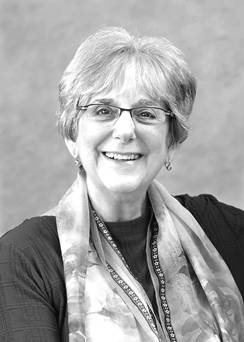
A conversation with Living Wisdom High School of Palo Alto board members Helen Purcell and Gary McSweeney. Gary helped start the Palo Alto Living Wisdom TK-8 School in 1990, where he taught middle school (grades six to eight) for twenty years. Helen has taught at the elementary, high school, and college undergraduate and graduate levels. She currently serves as director of the Palo Alto TK-8 Living Wisdom School.
 Gary: Our local newspaper, the Palo Alto Weekly, recently printed an article by a girl who’d been student body president at Palo Alto High School. The article was based on her graduation speech, where she told how she’d played four sports, achieved a 4.0 grade-point average, and received early acceptance at Stanford, and how she had hit the wall at the end of her senior year.
The article appeared at a time when there was serious concern in the community over a number of high school students who had committed suicide, overwhelmed by the pressures to perform in and beyond school, and agonized by a sense of the meaninglessness of it all.
Reflecting on the article, my thought was that it seems parents and teachers are holding out a fulfillment to kids that will come in some far-off imaginary golden future time, but that means very little to the kids right now, and that they are feeling utterly deprived of a sense of joyful purpose in their present lives.
 Helen: One of the fundamental principles of Education for Life is that trying to force someone to learn never works — and worse, it’s horribly demotivating. Yet there are extremely effective, proven ways to make learning enticing, magnetic, engaging, and personally fulfilling for teens so that they will not only want to learn but will be eager lifelong learners. Our teachers have no need to stand over the students with a frown on their face and a ruler in their hand, because we’ve developed a curriculum that gets the kids engaged and excited.
A book that has powerfully influenced my thinking about school is Frames of Mind: The Theory of Multiple Intelligences, by Howard Gardner, a professor of education at Harvard.
Gardner’s research showed that people have unique strengths. Our common sense tells us that this is so, but Gardner was able to present hard evidence that our uniqueness is wired into our brains. He identified seven “intelligences” that are neurologically independent of each other, and he’s since added several more.
The first intelligences he talks about are linguistic and mathematical/logical. They are the intelligences that the SATs and STAR tests are designed to measure, and they are the rational-linguistic intelligences that run our society today.
The other intelligences he studied included spatial intelligence, musical intelligence, interpersonal intelligence, and intrapersonal intelligence.
When I first read the book, I thought, “I’ll try this in the classroom,” because it’s a particular beauty of Living Wisdom that we have the flexibility to adopt ideas that will help our students.
When I talked to the students about the multiple intelligences, they picked up on it immediately, because it felt right. They found the idea tremendously liberating, because it was saying: “You don’t have to be intelligent in every way. You have your own way of being intelligent.”
Nobody has all of the intelligences perfectly integrated and aligned. As Gardner pointed out, we have our own unique personal strengths for interfacing with the world, and we can use those strengths to bolster the less-developed intelligences.
It’s been a wonderful way to help our teachers and parents understand how important it is to focus on the unique strengths of the individual student, and help them build on them.
Students Learn to Lead with Their Strengths
At LWS, we ask, “What are this student’s particular strengths, and how can we help them use those strengths to develop in other areas?”
In math or science class, for example, if a student’s strengths are in language, the teachers will choose a textbook for the student that is more linguistically oriented.
Gary: We get to know the students so well that we end up giving each one a highly individualized math curriculum that’s based on their special strengths, and then you find that you can show them how to leverage their strengths to develop their weaker areas. For example, you might change their assignments to allow them to build their self-confidence by working on problems that they can handle, and once they’ve developed some confidence you can challenge them with the problems that would have stumped them before.
I can’t overemphasize the importance of building a relationship with the students. When they’re receptive to what you’re saying to them, you can help them learn much more efficiently.
With kids who’ve just enrolled at our school and are new to my classroom, I’ll sometimes notice that they’re holding their shoulders high and tight in math class, and after a few months I’ll see that their shoulders are relaxed, because the teachers aren’t judging them with an impersonal “pass-fail” approach, but they’re coming over and asking, “Can I help?” and they’ll spend as much time as it takes to help the student master the basic concepts.
Helen: Some of our new students will be ahead of grade level, but others will be behind, and what are you going to do with so many diverse abilities? Are you going to force them all into the same curriculum? No! You give each one exactly what they need, at their level, and soon they’re performing beautifully.
You’re always calibrating the lessons very individually, and you’re making time for each student, and arranging the curriculum so that they can feel good about what they’re doing, because they’re having success experiences daily and understanding what they’re doing, and they’re not just memorizing it and spitting it back on a test. And this is why, when people visit the classroom, they’re struck by how remarkably engaged and happy the students are, and how much they always enjoy working at the level of their own challenges.
Do LWHS Students Take Tests?
An instrument that has been central to our approach is the Authentic Assessment series of books. Authentic Assessment gives students, parents, and teachers a much more accurate gauge of each student’s academic progress than test scores do.
Certainly, we test our students. We test them often, because we need to be sure that they know how to take multiple-choice tests, matching tests, and essay tests. So we give them those experiences to ensure that they won’t be at a loss when they’re confronted with midterms and finals in college.
Testing is a way to measure learning, but it’s the way we test that makes a major difference. When I was in high school, we were given tests that required us to spit out information that we were expected to memorize word for word. The problem with that approach was that after I passed a test I immediately forgot what I had memorized, so there was nothing I took from the test that would make me a better student or person.
It’s why, when we create an objective test, we’re very careful to construct questions that are meaningful, relevant, and even fun, because humor is an amazing tool for learning, and we assess the test results with a focus on helping the student improve and achieve their best.
Testing or Assessment? Which Yields the Best Results?
To assess a student’s progress, you need to observe the student as a person, and not just as a mathematician, writer, scientist, or artist.
We have three conferences with each student’s parents during the school year, because we find that it’s a wonderful way to create a partnership between the school and the family. The teacher might ask them, “What are you saying to your son or daughter at home about this or that subject?” Or a parent might tell us something about the student that we couldn’t be aware of at school.
“He was really upset about — .” “She was really stressed about — .” And as soon as we hear it, we take action immediately to address what’s going on.
A core tool of the parent-teacher conferences is the student’s portfolio. We collect samples of the student’s work in an accordion folder — for example, in language arts I’ll ask the students to keep every draft of everything they write, because I want them to see how their writing improves over time.
I’ll sit with the parents at our conference and I’ll show them the trajectory of the student’s improvement. We believe that portfolio assessment is a very clear measure of the students’ progress, whereas letter grades leave lots of questions unanswered.
What does it really mean that my daughter received an A, B, or C? Did she actually learn something, or did she just “memorize-and-forget”? Did she improve her ability to learn? Did she become more enthusiastic and self-motivated to learn? Or did she simply study to the test and quickly forget the facts she crammed?
Years ago, when a group of education researchers asked teachers to grade the same packet of essays, they found that the grades varied from 99% to 2%. When they asked the same teachers to grade the same essays several months later, some of the teachers who had given A’s now gave F’s — a complete reversal! The study verified the meaninglessness of assigning letter grades for essay tests, where grades are given subjectively.
In our school, we want the students to develop skills far beyond what we can measure with a letter grade, and then we want them to be able to look at their work and see how far they’ve come.
At the end of the year I’ll insist that they put several pieces in their portfolio that I’ve judged to be their best. These will be pieces that show how well they can write an essay, exercise higher-level thinking, be creative, and engage the reader. So when they leave us they’ll have two or three fat portfolios of their very best work.
When you give young people a stimulating curriculum and teachers who are deeply caring and aware, you get a level of learning that is deep and enduring, and that gives the students experiences they won’t forget. We believe learning should be based on lovingly giving them experiences of success every day, rather than subjecting them to the brutal judgments of an unrealistic “keep up or else” competitive ranking system.
Education for Life prepares the students to face the challenges they’ll encounter after high school and college, with confidence, enthusiasm, and joyful appreciation.
Education for Life demands a very high level of dedication and energy, because teaching in our schools is more than a “job” — it’s a calling, and a mission. We are creating a new template for education that we believe will spread beyond our schools to benefit young people everywhere.