
Keshava Betts is a member of the core faculty, teaching humanities and PhysEd at Living Wisdom High School in Palo Alto, California. An accomplished cellist, singer, and martial artist, he coaches the school’s award-winning powerlifting team.
Q: Keshava, Your life has been unique, in that you’ve had vast experience of Education for Life, starting literally from the cradle. You’ve also had lifelong experience with sports and fitness, and how they are traditionally handled in schools.
There is a trend in education today to de-emphasize or eliminate anything that might steal time from academics, and you’re doing exactly the opposite with your high school students, emphasizing fitness and sports as important to their overall experience of school, and as a valuable venue for learning life lessons.
Please share your thoughts on where exercise and sports fit into a well-rounded education, and why they are particularly important in the teen years.
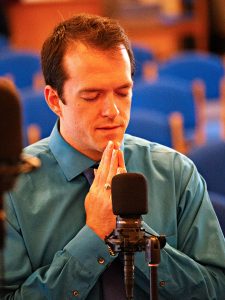
Keshava: When I was a young boy at Ananda Village, I remember how excited I was when I read that the kids in Paramhansa Yogananda’s school at Ranchi, India excelled in a variety of sports, including combat sports. In Autobiography of a Yogi he mentions jiu-jitsu and traditional Indian sword fighting, as well as other sports.
At one point there was heated debate among the parents at Ananda Village about kids doing intense sports, including combat sports. My teenage friends and I were definitely on the “pro” side of the argument, as young men with lots of aggression and testosterone who were getting into martial arts with great enthusiasm.
We had been put in martial arts classes when we were very young, and now we wanted to start fighting, not just doing katas or forms but actual combat. I remember how we got in trouble for wanting to fight, and how some people were insisting that it was crude, animalistic, and so on.
On our side of the debate, there were adults who were very supportive, including Gopal Sims, who I believe is the second-highest ranked American black belt in karate today, sixth degree or something. At any rate, he was also a professional fighter and boxer and taught martial arts, and I remember how he trained me for a time.

Gopal Sims
(adapted from Google Search AI)
Andre Gopal Sims is a longtime Kenpo Karate practitioner and instructor. He holds a 6th-degree black belt and has won multiple international championship titles. Operating out of northern California, he taught martial arts, self-defense, and yoga at Sierra College for more than two decades.
Sims is highly respected in the American Kenpo community for his technical skills.
Early in his martial arts journey, he incorporated yoga to help control his combative tendencies, later utilizing these methods to help his students achieve a state of inner calm.
Sims has taught self-defense and martial arts courses for military veterans returning from Iraq and Afghanistan, using the martial arts as a therapeutic tool to aid their mental focus and transition.
He has operated the Andre Sims Kenpo Karate School and has been deeply involved in his local community, including work with the Sierra Family Medical Clinic and community agriculture.
Keshava: I had learned a little bit of boxing and mixed martial arts and some ground fighting, and I could beat almost anyone who wasn’t trained, because you can beat most people with even a little training.
At one point, I took a martial arts class with Gopal at the local community college, and at the end of the series, he had us put on boxing gloves and fight each other. And, as usual, I sort of pummeled everybody, even though I was fifteen or sixteen, and I was fighting nineteen and twenty-year-olds. But I had more training, so I was able to outbox and outfight them.
At the end of the session, Gopal looked at me and said, “You want to do a round?”
I said, “I’d love that!” Mind you, I was sixteen and he was probably in his mid-fifties, and to my mind he seemed like an old man.
I’ll never forget how he put on a pair of giant pink boxing gloves and said, “Okay, I’m not going to hit you with my right hand, because it’s too powerful, and I don’t want to hurt you.”
And, you know, that was a bit of an ego-buster for a sixteen-year-old, to be told that this fifty-five-year-old guy isn’t going to hit you with his right hand because he can’t control its power. (Laughs)
So I was realizing that I had a tactical advantage, because he was old and he’d told me he wouldn’t hit me with his right hand, and I only had to be aware of the left.
We began fighting, and he was circling and probing my defenses, and then he set up a left-hand cross and punched me so hard that he knocked me to the floor.
I remember realizing how beautifully I’d been set up, because he’d baited me. I’d gotten careless and my guard had shifted, and just when I realized that I had lowered my hands, I saw the Pink Glove of Death come zooming into my face. (Laughs)
I’d never been hit so hard. I literally sat down, and he didn’t knock me out, but I was completely unprepared to get hit like that, and I loved it!
I stood up, and we kept boxing, and a few minutes later he hit me again, the same punch, and it was humbling. I could say “humiliating,” except that my ego was rejoicing, because I knew that I was strong enough and aggressive enough and had the technique to overcome anyone else in the class. But mostly, I recognized that the only reason I was capable of doing that was because I didn’t fear getting hit, and everybody else did. So then, to face someone who actually had skill was very satisfying to me, even at sixteen – to discover what true greatness looked like in an opponent.
I didn’t feel humiliated. I was actually very grateful. It was a humbling experience, but also an inspiring one, to see how masterful he was, and I had a lot of respect for him.
Gopal worked for a private security firm and owned a gun, so we would go to the shooting range together. He was very martial, but it was also a time when I was beginning to be devoted to God in earnest, and Gopal was able to inspire me in that way as well.
Here was this guy who could knock me over with a single punch and who was stronger and faster and a better fighter than I or any of my teenage friends. And then I went to my first eight-hour Christmas meditation, and I remember how I struggled to sit still. During the breaks I would stand and stretch, or I would go outside and walk around, and each time I would see Gopal sitting there, unmoving as a stone, and he never stood up.
I think I even went home for a time, and when I came back for the end of the meditation, Gopal was still in the same spot, and it looked as if he hadn’t moved an inch.
The contrast between those two qualities, of a man who could be so powerful in motion and so stoic in stillness, affected me deeply, and I admired him for it.
I asked him, “Gopal, it looked like you literally didn’t move.” His answer amazed me, because he didn’t say, “Oh, you know, it’s a lot of will power and discipline.”
He laughed and said, “I guess Divine Mother didn’t want me to move, because She came, and I became so engrossed that I didn’t realize it.”
He was an interesting paradox of great martial power, strength, and valor, and all of the classic martial ideals, and then I saw him express an even more transcendent power in meditation.
That was very intriguing to me as a young man, and I took it deeply to heart, and I considered him a mentor and role model for several years.
The point I want to make is that I can now remember that experience when I’m working with the teenagers at the high school, because they have lots of energy and power, and I believe it’s very important for them to be consciously aware of the incredible power that can move through them – to feel the vitality of their will power, the energy in their bodies, and to have respect for that power, but then also to have held up for them examples of what they can be, not just physically, but in more abstract terms, by using their will to transcend the physical until the will becomes truly interiorized. And my memories of Gopal have helped me understand the kind of greatness that our teens need to have modeled for them.
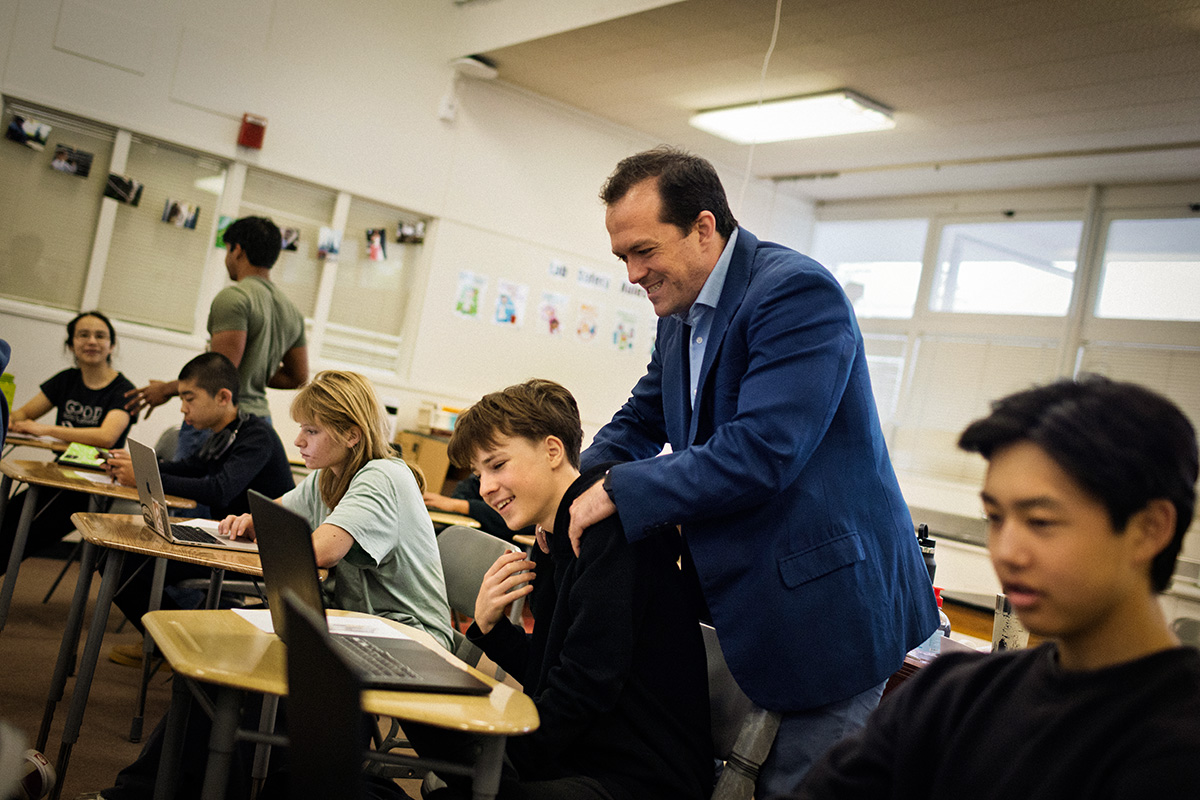
I find that sports and fitness give us a wonderful arena for developing will power, courage, perseverance, and many other qualities that are essential for a good life, and that are perhaps most easily learned in the physical arena.
I find that it’s hopeless to try to teach our high school kids about will power, if I’m only giving them words, but that when they start lifting weights, it becomes very real for them.
When it starts getting hard and they stop and say, “I can’t,” that’s a moment of great value for them, because they may think they’re putting out tremendous will, but they often can’t imagine what’s actually possible.
I train alongside them, which helps them, because they can see what my effort looks like, and even though I’m not a professional powerlifter, I do know how to put out will power.
So they can see what it looks like to put out will power through the physical body, and what it looks like to push the body at close to maximum effort. By my example, and by my encouraging them – “You think you’re at the line, but you’re not, and you can actually go farther!” – they begin to understand and feel what will is, and what power feels like.
I believe it may be the most valuable lesson they can take from PE, and it’s the part that thrills me. If I may be so bold, I suspect it’s why Yogananda had his students practice combat sports, so that they could learn qualities of courage, selflessness, and fearlessness – qualities they could transfer to the spiritual realm – to recognize, for example, that if I can be fearless in the face of an enemy, I can be fearless in the face of my karma.
With our kids, we aren’t doing martial arts, but we are battling against the obstacle of the weights. And if they learn about those qualities of will power, discipline, consistency, and concentration that can bring us to greatness, they can translate those qualities to other areas of their lives, including academics, spirituality, or being a good friend, a good employee, or a good parent.
I’m reminded of Saint Francis, who told his monks, “Preach the gospel at all times. Use words if necessary.”
In the teen years, they are not as ready to learn through words as adults are, because the intellect doesn’t come to the fore in their natural developmental until they are about eighteen. I’ve seen that if I am only talking to them in abstract terms, it doesn’t take hold, but when they do something that gives them a living experience of the principle, and if I’m modeling it for them, that’s when it comes alive.
By having their own lived experiences, they can get an interiorized, intuitive understanding of important life principles of will power, personal magnetism, leadership, and so on.
Q: It used to puzzle me to listen to the EFL teachers talk enthusiastically about the will power years in the context of the school’s service adventure trips and other active experiences.
Craig Kellogg, who teaches grades four and five, is preparing his kids for the will power years that they will enter in sixth grade. He talks with great enthusiasm about active music, active exercise, and active walks, with skipping and sprinting and duck-walking, and so forth, to stimulate energy. I’ve come around to understanding how wonderful it is for the kids, because when they start math class after exercising and doing meditative practices to awaken enthusiasm and focus their attention, and singing and chanting to open their hearts they are able to bring their whole self with enthusiasm to math.
You seem to be saying that action is even more important at this age, and that it can light them up.
Keshava: Absolutely. The first imperative for personal growth is energy. You must have energy before you can refine your energy and direct it with concentration toward your highest goals, with sensitivity for the realities of others, and for any impersonal realities you might have to face along the way. I believe teens’ rambunctious energy is absolutely essential, and that it needs to be leveraged as a central part of the instruction in the teen years.
Q: There was a famous American educator who said, only half-humorously, that when your kids are thirteen you should put them on a bus and travel all around, and not stop until they are eighteen.
Keshava: When we can give teens a complete education that brings their whole self into the process, with their own unique gifts and energies, we have to be willing to get adventurous, even it means we may even have to get a little dirty.
You have to be willing to go out and get scraped up a bit, and be unafraid of that. Of course, that isn’t to say that you want them to be coarse or unrefined, or that you’re going to put them in danger – but to help them learn to struggle boldly until they can develop enough energy to be aware of their own power, so that you can help them learn to control and direct that power in positive, fulfilling ways.
Lessons & Surprising Success of a Micro High School Powerlifting Team
People are impressed when they hear about our powerlifting team and our awards, and so on. I had to laugh recently, when our school’s media director was talking to some guests about the successes of the powerlifting team. Her words were touching, and everyone was saying what wonderful work we’re doing, and what a blessing it is for the teens, and how uplifting it is.
But what made me smile was that when I go to the gym with the kids, we’re in this armpit gym that’s a real-life, bonafide powerlifting dungeon. It’s dark, it’s dingy, it’s dusty, and the guys who train there are these huge behemoths with tattoos, and they blast heavy metal music, and it’s not even Black Sabbath or Metallica, which is a bit more classic and musical, but sometimes it’s just screaming nonsense, and it’s egregious. The horrible, and it’s about raw unrefined energy, and it’s darkening.
Swami Kriyananda talked with great emphasis about the negative effects of that kind of music. One of the big powerlifters was laughing. He’s a nice man, and he said, “I feel so bad to subject these teenagers to this music all the time.”
I told him, “No, it’s part of the culture.” But I was chuckling because everyone was saying what a wonderful thing we’re doing, and then we show up, and there’s Alice who’s cute, angelic, and super serene, and there’s this terrible music blasting through the gym. But I feel, deep down, that it’s okay for them to be briefly subjected to these somewhat unprotected, unhygienic environments and to put out tremendous will power and learn to be untouched, and to rally the intensity to do something great.
Q: In the cycle of a child’s development, the stage that comes just before the Will Stage in the teen years from twelve to eighteen is the Feeling Years from six to twelve.
The refined feelings of the heart are what enable us to know what’s right and wrong. They tell us what we really want, and how to refine our expression of will power. They tell us which actions will give us happiness. And then we get into the will power stage, and our feelings are tested. How real are they? How sturdy are they? How firm and unshakable? The teen years are when life begins to throw tests at us to see how deeply we are willing to go into our values, and whether we are strong enough in them to bring them into the adult world.
Keshava: Yes, how strong is your heart? Can you endure the discomfort of the world and retain your core beliefs and feelings, and your idealism and enthusiasm?
I love to give them opportunities to learn to discriminate and reflect on what they truly feel and believe, by giving them their own experiences and letting them discover how they feel about them, deep down.
I think you can very often help them become better people by letting them first be super-energetic, and only then helping them learn to use their energy in constructive, loving ways.
But if you try to skip the first stage of being super energized, even if it’s unrefined at that point, you end up being a nice person who’s kind of neutered, with no will and no power.
“I was wild and had more energy than I could handle, and I often got in trouble with the leaders of the school and other authorities. I was riding motorcycles and fighting. I was hell on wheels, and I had so much energy that when I was fighting, I fought like a maniac. When we were riding motorcycles, we were lighting bonfires and jumping our bikes through them with a camera because we thought it was awesome.”
We were just so bold. But then when I sang to God, I sang like I was going to try and rend the sky open, and all of a sudden I would have moments when the veil would really part. And, again, when I was singing the oratorio “Christ Lives” that Swami Kriyananda composed, I would feel the actual presence of Christ, because I had so much energy.
So there was the paradox that I loved riding motorcycles, and I loved being bold and dangerous, but then I knew that God was real, and my personal experience of the music had an intensity that opened a portal for me to have a true divine experience.
I honestly didn’t know how to live my life except by grabbing it with both hands, and if you said, okay, we’re going to sing well, or we’re going to meditate, then yeah, I was all-in – yeah, let’s do it! And it was fascinating to me to see what a difference it made to have that kind of raw energy to work with.
When I was growing up, there were some boys who were very docile. One of the boys meditated an hour and a half every day, and he didn’t chase girls. All he did was finish his school work and study the scriptures, and he was, at the time, an ideal student. But what’s interesting to me is that he’s no longer on a path that demands a lot of energy and will. God bless him, I hope he’s doing well, but he hasn’t succeeded a lot in his life.
I don’t have a lot of insight to offer, other than that I thought it was interesting how, by contrast, I, who was really irascible and wild, when I got the bit in my mouth and found my way, nothing was able to shake me, by the grace of God, and I’ve been able to serve dynamically because of the power that allowed my teachers to help me cultivate any number of positive and helpful skills, from playing cello, to singing, sports, and teaching.
I believe the reason I ended up teaching teens is that there’s a certain service I can uniquely provide, because I went through those years in an extreme fashion, and I learned a great deal from my experiences, about using willpower to find true success and happiness.
I want to inspire the kids to live heroic lives, and to show them how to do it. I think that’s where competition is important, because it can feed a desire to experience our best.
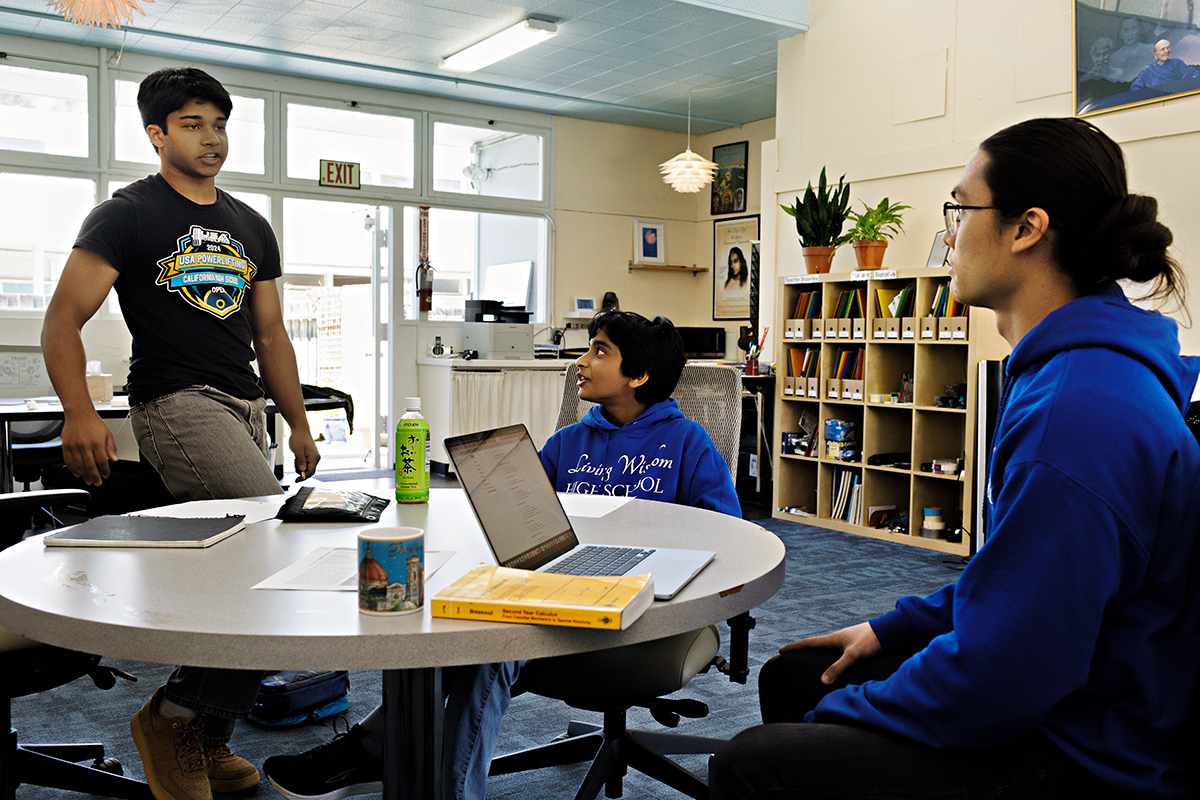
The word “heroism” is very dear to me. In Education for Life, we believe that the Feeling Years from six to twelve are when you want to feed children stories of real-life heroic people who have led great, exemplary lives, and to inspire them with what humanity can be at its finest. And then the will power years are when you begin to learn to act on those feelings and manifest that goodness and strength.
It’s important to teach kids how to become their idols. Everybody wants to be a good person. Everybody wants to be great in some way. And so a thing I particularly love about strength training is that it’s a talent-agnostic sport, and that regardless of the athletic talents you have or don’t have, you can persevere and develop enormous strength.
I like that strength is a quality of heroism, in an abstract sense. So, to take a fourteen-year-old who can’t lift much of anything, and in a couple of years have him looking like a young superman, like Hari who’s on our team, is quite an achievement for him personally.
Q: He’s got a presence, a quiet magnetism, confidence, and inner harmony.
Keshava: Yes, and when the other kids look at him, or when they lift with him, their jaws are on the floor, because “What’s that about?” He looks like a demigod. And I love that. I love how overt that is. He has great magnetism. But then it opens up a range of interesting discussions. Like what is strength, really? What is the purpose of our strength? What is strength, if not to help others?
You know? And it’s a magnificent example of how you can use your willpower as a teen to learn all kinds of valuable things about yourself that you can work to improve, and apply positively in everything.
It translates to a sense of nobility and valor and courage, and even teamwork and service and sacrifice. And what’s inspiring to me is that they are explicitly understanding this through their own experiences, without my having to preach it to them word for word, and tell them that it’s the most valuable thing they’re gaining.
Q: When you start to get fit, you feel that you can do anything, because you’ve got the energy and the will.
Keshava: Yes, you feel empowered.
Q: And the greatest personal growth and learning happen when you press the edges of your fitness, not when you’re just maintaining at a certain level, year after year.
Keshava: Yes. An interesting thing about powerlifting is that as you get better, you have to be constantly working at the edge, where every workout feels equally hard, and there’s never a moment when you’re thinking, oh, I’m strong now, and everything’s easy. In fact, the stronger you get, the more it demands, because you really develop the ability to push yourself.
I think it’s a priceless lesson for them, to see how the ones who are really excellent are working harder than the ones who may be the most talented coming in. The new kids look at them and go, “Wait, they’re stronger than me. But, yeah, okay, they’re working harder than me.” They’re putting out way more, and it’s challenging for them.
A student asked me, “Wow, is it always going to be this hard?” I said, “It’s only going to get harder,” but that’s the joy of it, that you can grow into it, and it’s a wonderful feeling.
It’s fun to see that as their power and dedication grow, it naturally begins to influence their life.
At first, they train a couple of times a week, and when they get invested it becomes four times a week. But then they start to realize that they can’t make as much progress if they aren’t sleeping enough, and unless they’re eating right and getting sunlight. “I can’t watch too many YouTube shorts because it’ll interrupt my sleep.” And now they’re realizing, “I want to lead a more wholesome life so I can be stronger.”
It’s a happy life, and once they understand that principle, they realize that if they apply it to anything else, they will be successful.
Q: I was in touch with Clarence Bass, who won a Mr. America bodybuilding title in his age and height class. He said that if we could improve endlessly, we would all be lifting apartment houses. But there are times when the body will let you know that progress is cyclical, and you have to change your training, or take time to let your body re-set. He said that’s when it gets fun again, when you’re making progress.
Keshava: One of the things that has helped build the magnetism of the powerlifting team is that we didn’t set out to accomplish anything too specific or narrowly defined.
I’m accomplishment-driven. I like to set myself a goal and conquer it, and I sometimes think my single-minded focus can get in the way. But with the powerlifting team, I’ve wanted to share with them something beautiful and inspiring, and most of my effort has been on supporting them with encouragement and advice.
It’s not about where we’re going, so much as that we’re focused on the process, and that’s where a lot of wonderful experiences have blossomed, including their successes in competition. But that’s been a result of learning to work with themselves exactly where they are, with their own DNA and their own karma, and the wonderful sense of team, and the positive direction and steady forward progress.
The successes, the magnetism, and the joy of the team have reflected their effort and experiences, and not so much any influence I’ve had.
In that sense, I’ve learned some profound truths about leadership. When I was a teenager, because I had lots of will, I was a natural leader, and people would follow me. But I would try things, and build things blindly, and they would be destroyed by my limited understanding.
In this case, the lesson has been particularly vivid, because it has evolved and grown without any intention of my own. I’ve simply tried to serve them and give to them, and as they’ve blossomed, they’ve inherently understood what the next right step will be.
Despite all the talk of our successes, and the possibility that we might set records and do well internationally, there was never a goal that I tried to guide the team toward. Rather, my greatest spiritual lesson has been to learn the power of self-forgetfulness.
It’s baffling, in a sense, because it feels like we’re in a tiny boat on the ocean together, knowing that we’re going in the right direction, because it feels right, but it’s also a little scary because the team has a lot of magnetism, and the magnetism is primarily around two of our athletes, Ada and Hari, and it’s been fascinated to realize, in humility, that much of the strength of the team doesn’t actually emanate from me, but that it’s coming through us all together.
It’s easy to fantasize that if we keep going, we could be winning all sorts of things in a couple of years, and we could be notorious, and blah, blah – which is all very true. But then it’s interesting to recognize that in two years it might be over because it was just a reflection of what these few students needed.
It has taught me valuable lessons about leadership, and how much magnetism and success we can build when we, as teachers and leaders, are simply trying to water the seeds of the students’ inherent greatness.
Of course, with that understanding there also comes an intense sense of responsibility.
When I coached Hari at nationals, it was an interesting experience for me, because I felt that a major part of my role was just to get out of his way and only offer advice and encouragement that would help him move forward by his own power. I felt, “This guy has a lot of magnetism for this, and I just want to help him express his greatness.”
I find it interesting that in this modern day the idea of open competition between students is often frowned upon and discouraged. Where, in academics, for example, you aren’t allowed to publish grades, in case someone’s feelings might get hurt, or whatever.
There are folks in education who are very much against the idea that we should use standardized testing to determine where a kid can go to college. They claim that it creates an atmosphere of intellectual elitism where the slower kids might feel judged.
But it’s really all just based on a false idea of democracy, because, let’s face it, there are differences, and it’s possible that you’ll create a great deal more damage by artificially declaring that we must all imagine that every kid is equal, when they clearly are not.
Equal opportunity, yes, but an imposed, artificial leveling does no one any good, and it can be extremely demotivating and harmful for the kids who are most capable and are eager to do good in the world.
So, on the one hand, there’s this fretting about equality in academics, but in the athletic world, it’s much more realistic and free, because we are inspired to see “the best of the best” competing against each other.
Cooperative Competition: Helping Friends Grow Stronger
It’s something that I’ve found deeply inspiring about working in the tiny microcosm of a very positive sports culture. What I find is that it’s incredibly healthy for these kids to go lift with each other, because you can instantly see who’s the strongest, and there’s no question but that he’s number one and she’s number two.
In powerlifting there’s something called a DOTS score that ranks your strength by factoring in your weight, height, age, and gender. So it’s an equalizer. Obviously, the men are always going to lift more than women, but then we can adjust for that and see who has the highest DOTS score. Because, again, there’s no mystery about who has the highest DOTS score.
What’s fun is that it’s realistic, and also, it places the focus on the individual, and on individual progress.
Because we are all unique and different, and what’s most laudable and praiseworthy is not just how much you can lift, but how much progress you can make at your own unique level. Why? Because it’s a cosmic principle that what every living creature is seeking is to experience increasing happiness, and freedom from suffering. And happiness and freedom increase when we are, individually, at our level, expanding our awareness by becoming more than we were – when we are becoming strong and expansive in our body, feelings, will, mind, and soul.
For teens particularly, sports is a wonderful teacher, because they learn about competitive spirit in healthy ways, where you’re competing against yourself, and you’re having an ongoing friendly competition against friends who are close and bonded by ties of love.
It’s constructive competition, where we’re excited about every one’s progress at his or her level. Rather than destructive competition where the goal is to be able to flex your ego and strut around pounding your chest and declaring that you’re the best and everyone else is inferior.
What I’m seeing is that loving competition is extremely healthy for them as individuals and as egos. Because, let’s face it, teens do need to build a strong sense of their own identity and power – and we may call it building a strong ego, but what we’re aiming to help them develop is a healthy brand of ego that can expand its sympathies to cooperate with, support, and help others, because it feels much better than competition of the narrower, contractive kind, where it’s only about “I, my, me, mine.”
I’m seeing that our kids don’t feel a need to beat everybody else to feel that they are winning, and to feel good about themselves, but that they can watch someone obliterate what they can do, and they can rejoice in their successes and take it as an inspiration to do better themselves. It’s a kind of competition that allows them individually to take one step farther and feel really accomplished, and be supported by your teammates who are your friends.
I’ve witnessed this at the gym, where Hari, for example, who’s racing to deadlift five hundred pounds, will be just as excited when a new kid deadlifts a hundred and eighty. He’ll be smiling and rejoicing, telling them, “That was incredible.” And the others will drift over and do the same, smiling and being all-in with supporting the new kid. And I don’t think there’s anyone who would say that that kind of competition isn’t wholesome.
Q: It’s an attitude that infects every student, teacher, and classroom in an Education for Life school. I’ve witnessed it endlessly in the schools, and if a student gets overly competitive to the extent of becoming obsessed with winning at all costs, even if it means he may hurt another kid’s feelings – I’ve seen that the teachers are immediately aware of it, and that they instantly step in and help the overly competitive or misguidedly competitive kid correct his thinking.
Keshava: That was my experience in the EFL schools, and I would love to see that attitude of healthy, loving competition, that aims at joy through individual growth, translate into every area where our kids will need it – where I can celebrate you for being who you are, and for being great in your own ways, and I don’t need to feel less because I’m not equal to you in pure numbers.
Q: That’s what I’ve seen in the EFL schools, that numbers are a goal that can inspire growth, but that what counts isn’t pasting a badge on your chest with a number on it, but the fulfillment and satisfaction and joy of growing organically on a scale where numbers may, or may not be a valid measure of your progress. You can’t assign a number to the love of a healthy team culture.
Haze, who teaches advanced math and humanities in our high school, is an accomplished martial artist. He’s shared how healthy competition is a fundamental part of the atmosphere in his martial arts teacher’s dojo, where they teach that our individual successes are not meant to set us apart, but to serve others by helping them achieve their own successes. They celebrate everybody’s achievements at their level.
Keshava: Somebody asked me what true success means, as a more or less generalized concept, and I felt inspired to say that success, to me, means overcoming my limitations and helping others overcome theirs.
The culture of Education for Life is permeated with the idea of self-expansion, which brings all manner of wonderful rewards in its wake – confidence, a strong self-identity, happiness, and expanding circles of friendship and love.
Every little individual victory is a moment of self-expansion. Paramhansa Yogananda said that if we can feel joy when other people are doing well, it’s a sign that we have made real spiritual progress, and that we have climbed up the ladder of awakening awareness when we can relate to the needs of others and give them kindness, compassion, and support. So, yes, these things may look small and humble, but they are also very beautiful and meaningful.
A Revolution in Sports: Training Methods for an Energy-Aware Age
Q: It’s inspiring to see how these methods and attitudes are spreading in sports at the highest levels, where, for example, the University of Indiana football team which won the national championship in 2026. They had a healthy team culture that took care of the individual and didn’t browbeat them, or drive them into the ground with over-training. As a result, all of their players were healthy at the end of the season, which is very rare in football, because they weren’t doing killer workouts.
It’s a key reason why Indiana won. Their players looked fresh, confident, healthy, happy, and ready to play. It’s what happens when you create a sports culture that takes care of the individual. When each person is helped to bring their best, you get a happy team that can perform at its best.
Keshava: It was interesting to watch our kids at nationals, and to see them peak at just the right time. That’s a real art in powerlifting, of knowing how to manage your training, and how to reduce it in exactly the right way so your body will be rested, fresh, and super-compensated at nationals.
It was remarkable to see how everything came together for them to express their best self with maximum energy, and accomplish things they’d never done before.
They did extremely well in competition, and many of them hit personal records. We’re realizing in sports that putting out maximum energy requires that you take proper care of your central nervous system, which is the body’s conduit for energy, and this year they peaked their CNS just right.
Ada, one of our powerlifters, was worried because we had a competition ten weeks before nationals, and it left her CNS too fried to lift more than a fraction of what would usually be easy for her. I told her, “Don’t worry, this is natural, just give your CNS the time it needs to recover.” And then she went to nationals and did exceedingly well.
They’re learning to manage their energy, and it’s another highly useful life skill that they’re taking from sports. They peaked at nationals and performed beautifully, with so much will and enthusiasm, and everything was just moving perfectly. Then, as soon as they came back, they were training in the dumps for a month because their bodies and nerves were fried.
It was a wonderful lesson, because they’re learning about what gives us the energy to succeed in whatever we’re attempting, and how to manage the natural cycles of growth, performance, and rest and recovery.
There’s always a cost when you’re putting out maximum energy and will. There’s a natural re-set cycle, and many athletes have trouble accepting it and learning to work with it, instead of trying to force themselves beyond their abilities.
We have to take the time to reflect quietly and understand how our bodies work, and how we can use them to achieve the best effect. As their coach, I’m learning that it’s very important for me to understand how to help them manage the natural ups and downs.
When I was younger I was fortunate to learn from world-renowned coaches in Los Angeles who had a superb grasp of powerlifting, athletic development, and spinal rehabilitation.
After nationals, realizing that I was helping potential record-setting athletes, I felt more motivated than ever to learn about peaking, the nervous system, and sport specialization.
The science of sports performance has matured enormously in the last fifty or sixty years, to where the sprinters who won the Olympics seventy years ago wouldn’t even qualify today, because we’ve gotten so much faster and stronger.