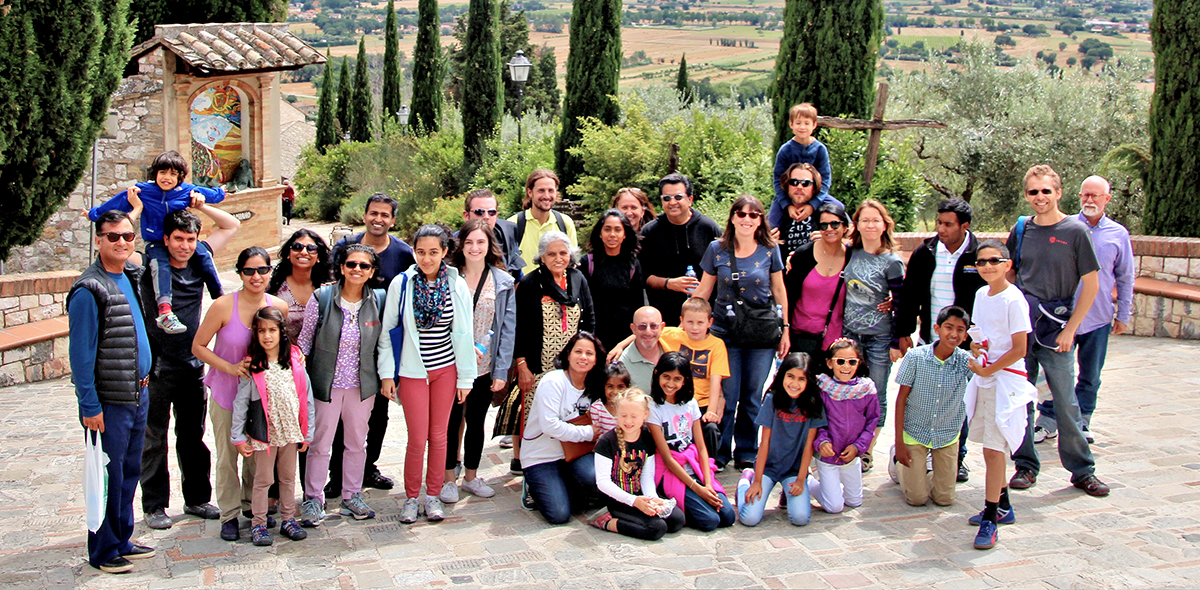
Morning Circle is an anchor of Education for Life at Living Wisdom School. In this two-part series of conversations, teacher Craig Kellogg offers a deep dive into the process and how his early experiences prepared him with an intuitive understanding of why it works, how to implement it, and how it helps each child.
Note: It’s a long read but will reward those who are thrilled by how deeply linked Education for Life is with the meaning of life, or who just want to get to know Craig and his wonderful work with the 9- to 11-year-olds.
Q: What were your early years like? How did you end up becoming an Education for Life teacher?
Craig: When I was young, our family moved every two or three years to another city, so I was always making new friends and reinventing who I felt I was, and a major part of the way I did that was through sports.

In my early years, I wasn’t so much interested in academics, because I was focused on making social connections and developing my skills in baseball and ice hockey.
We finally settled in Sacramento, California, and in my high school years my life was all about competitive ice hockey, and thinking about how to beat the teams that were competitive with us.
I felt that hockey was where I got the most value from school. Our coach gave me the positive feedback I wasn’t getting at home, so I would try hard to impress him. I was allowed to jump ahead of my age group and play with the older kids, and when I was the oldest we were state champions and I was the team captain. I spent time with the younger teams, helping them with advice and giving motivational speeches.
I grew up in a super dogmatic Christian family where there was lots of talk about Jesus. It was great in a way, because it showed me that when you have strong beliefs and a connection to a group, it can heighten your feelings about doing good. The Christian virtues helped me stay on a straight path for a long time, but then toward the end of high school I began to wonder if those values were true, and I began to test them.
I had a lot of will power, and I felt driven to use it, so I began doing things I wasn’t supposed to, just to see what would happen. It was an interesting experiment, but it ended in disaster. Doing things I shouldn’t do had value for me, because it gave me a clear understanding of how our actions affect our outcomes, and in the end I had an opportunity to learn the lesson the hard way.
I was the most senior hockey player in the league, and our team had advanced to the semifinals of the championships for the second straight year. We were heavily favored to win, but I got kicked out of the game for being a twerp, basically, because I was saying negative things to the referees, and then I had to watch our coach get kicked out when he stood up for me, and we lost the state championship, at the end of a year when we hadn’t lost a game.
It was hard, but it was the lesson I needed, and it gave me a solid basis for helping young people understand why it’s important to walk the line when you’re doing something that’s important to you, because your energy and your actions must be in harmony with your goal, and you can’t be all over the map and chaotic and expect a good result.
Those experiences were especially valuable when I was trying to help kids be successful in sports. Sports had given me a good set of general athletic skills, and when we would try new things together, like snowboarding, wakeboarding, or mountain biking, I knew how to explain it, because I knew how to help people learn new skills.
I could teach them to do things the right way, because I could relate to where they were, and I felt I could help them take their own next step, and that I could be tight with them and give them lots of support in doing something that might be scary.
I discovered that I could be patient while I watched them having fun with their attempts, and I could support them and help them get past their failures and find a way forward.
All the while, I was creating strong friendships through sports, and through the mutual experience of pushing each other to get better. It was a great help to me when I found Education for Life and began working with young kids as a teacher and mentor.
So that’s what my early childhood was like. I remember lots of small things, like driving to hockey games and thinking about how to beat the other team, and developing strength and endurance.
In the meantime, I had put schoolwork on hold until I entered college and suddenly had to start paying for my education. Then I had to devote my full will power to graduating as fast as possible, so I could stop paying the school fees.
Along the way, I made friends with my teachers, and I noticed that having good social connections with my professors helped me be more interested in the subject.
I would sit in the front row, and we would go for coffee outside of class, and I noticed that my relationships with the professors were deepening my awareness of how my actions were affecting my outcomes.
I noticed that people appreciated it when I brought positive energy, and that I felt good when I sensed their appreciation, and when I nurtured those connections.
I realized that because we had a connection, I could call my professor when he made a mistake on my test and gave me a B-plus. We would go over the test, and he would see his mistake, and now I had an A-minus, and he was willing to do that because we were friends.
So I learned the power of personal connections, and of having good relationships, and being able to say hello when I saw people outside the classroom.
It made me feel that I wasn’t just another student, because I was somebody who cared about what my professors were doing, and my professors felt the same about me.
Q: Surely it’s no coincidence that you were drawn to Education for Life, where having a close connection with each student is the key to the whole system.
Craig: Yes, it was a tremendous help to me when I began teaching at Living Wisdom School.
I entered college at Sacramento State University, but I was just seventeen and really too young to dive into the intellect, so I ended up being put on probation for a year and living at home.
I enrolled in a community college. I was paying my way by taking night classes and working a full-time job. It meant that I was very busy, and there was no longer time for goofing off, because I had to be very focused on what I was doing.
The positive side was that I realized I had more energy than most people, and that if I applied myself I could do well, and it was a good feeling.
At the time, I had an opportunity to travel to Italy with a friend, and that’s when I met Kshama. The long version is that it’s been a wonderful journey, because we ended up marrying, and now we’re both working with the school, where I’m teaching fourth and fifth and Kshama taught second grade for eleven years, and now she’s the director of our high school.
I had begun to miss having spirituality in my life, and feeling that there was an empty space. I was feeling isolated and empty and alone, and I was asking God if there was some way we could connect again, even though it couldn’t be through the kind of Christianity I’d grown up with, because that theology would just tell me I was going to hell for all the mistakes I’d made.
I was praying to God to hook me up with something I could believe in, because I had loved the feeling of having a soul connection. I was telling God that I knew my strength was from Him, and that I would love to have a connection again, and I was hoping He would give me a sign.
Then Kshama asked if I would like to go to Assisi, Italy, because Swami Kriyananda would be there. It seemed a bit odd, but I decided to go, because I had been praying for something new, and I didn’t want to overlook any opportunities God might send my way.
When we arrived in Assisi, I was nervous, hearing so many unfamiliar ideas and meeting so many new people. After the talk by Swami Kriyananda, I felt everybody looking at me with love. Kshama said, “They’re just full of love, and it’s what they do. They cultivate love and they share it.”
Soon I was feeling that I had found a heaven on earth, because I had been so isolated and alone, and now I was thanking the universe for answering my prayer.
Again, I was realizing that my outcomes would always mirror my actions, and that if I had the right intention, I could take steps in the direction that my intuition was leading me, and I would be fine.
I felt that I had discovered a spiritual science that would require self-discipline, but that it would lead me to a positive outcome, and that it was aligned with my experiences of using my will power to accomplish good things by pursuing goals that expressed positive values.
The path of Ananda spoke to me deeply, because I felt that I had found a way to understand how our lives work, and it held a promise that I could find joy in doing the right things.
After college, I worked for my father for a time, then I moved to the San Francisco Bay Area to be with Kshama. I began volunteering, and various opportunities began opening, one of which was at Living Wisdom School, where the teachers asked me to work with a student that some of them couldn’t understand how to help.
The boy reminded me of myself, because he was super-active and super-willful, and he liked to question everything.
I put him on a skateboard, and he got to figure out really quickly that our actions have consequences, because the skateboard is unforgiving, and if you don’t do something just right you get an unforgettable result! (Laughs) But if you do it the right way, you find that it always works.
So we connected through skateboarding, and because he had so much energy and he was super magnetic, when the other kids saw us having fun and they saw him learning, they began to ask if they could skate with us.
It became an informal after-school program during the summer, and then we were having skate practice on Saturday mornings, where the same three kids would come, and others could join us.
The boy was super magnetic in the classroom as well. He would tell his friends, “Hey, you know the new guy who’s helping with math and PE and does the after-school program? He’s really cool – he taught me how to skate, and he’s super fun and I like him.”
So the other kids were saying, “Oh, I like him, too.” And I realized that if you feed the alpha kid, it’s much easier to start having relationships with the rest of the group.
I was always thinking, “How can I get him on board with where I’m trying to help him go? It helps that we’re friends and he thinks I’m cool, and now he’s willing to go where I want to go at school, too, because of the relationship of trust we have, and it’s blending into teaching him the curriculum.”
I was always trying to understand what would make school fun for him, and because he sensed that I was on his side, he would give me some flex in the classroom, even if the subject was dull, because of the time we were spending outside of school, and it made our class time much easier.
It truly felt like we were friends, and I would make it clear by my actions. I would pick him up at his house and take him to the skate park, then we would go grab a burrito.
I would do things the other teachers wouldn’t do. We would shoot each other with Nerf guns. He had hockey pads, and I helped him with his goalie skills. So it was a nice relationship outside of school.
Q: Were you a teaching intern at the time?
Craig: It was the year before I began interning, when I was volunteering. The school had a play about the Dalai Lama, and I got to be the hind end of the yak. (Laughs)
Q: How did you hear about the opportunity to volunteer?
Craig: I was working at a bookstore that was owned by a couple who were part of Ananda. I also did side jobs like delivering food, and whenever there was an opportunity to make a little money I would say yes. I was volunteering at the school because it seemed like a good way to spend my time.
I would do anything that sounded engaging and fun. Playing with the kids sounded like fun, so I helped make props for the play. “Oh, you need another actor to play this part? Sure, I’ll help with that.” I helped with the scene shifts, and I was just putting out energy to do whatever I was asked.
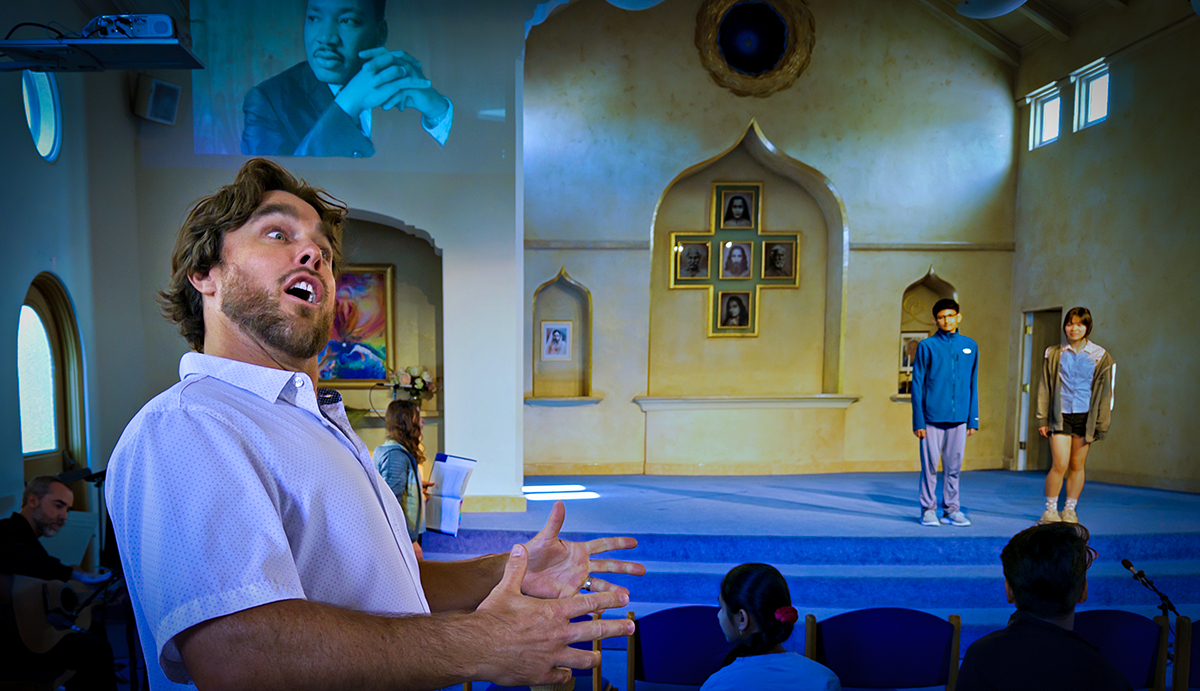
I had planned to start a coffee company with a friend, but it didn’t work out. So I was looking for something to do, and the school director, Helen Purcell, said, “Do you want to work at the school, and maybe help with math, PE, and after-care?”
I said, “Sure, that sounds great.” Meanwhile, the teachers were watching to see how I was interacting with the kids. I would play with the kids, like throwing them around in the swimming pool during summer vacation, and so on.
When I’m with kids, I turn into a kid, and I was always helping them raise their energy to their own highest level. I began to sense that when I kept my vibration high, they would try to match it, and it was like broadcasting my frequency to help them attune to their own highest energy frequency.
The teachers were watching me do these things, and they asked me, “Do you want to teach some more? We need an intern for Matthew’s classroom, because he has so many kids, and he could use your help for the coming school year.”
Then Matthew left after my intern year, and I stepped in and took his place. That was fourth and fifth grades, which I’m still teaching.
Q: Have you developed your skills as a teacher to a level that is different than when you started?
Craig. Definitely. At the start, I was still somewhat influenced by my childhood fears of not being good enough, and I would try to prove to everybody what I could do. But I’ve gradually been able to release those fears and feel secure in the job I’m doing, so that I can be wholly focused on understanding what this particular kid is asking for – not trying to give the kids ideas, but asking them questions and giving them lots of patience to create their own thoughts, and not judging their ideas.
I think that’s a critical part of EFL, asking the kids lots of questions about their thoughts so that you’re leading them deeper in their own thinking, because it’s also how you can get to know them, and know what they’re thinking.
A kid will come up to me all excited about some new creative idea, and he’ll ask a question to try to pull ideas out of me and get me to give him the words he’s looking for. I might say, “Hm, that’s a really good question,” then I’ll be silent, and when he gets bored waiting for me, he’ll say, “Okay, I’ve got an idea!” and he’ll run off to work on it.
I feel that my past experiences, added to my time teaching, have given me the keys to have good relationships with the kids, so that I can teach each one individually, which is the bedrock of Education for Life.
Q: You’re dealing with fourth and fifth graders, and they’re in the Feeling Years, from age six to twelve.
Craig: Yes, they’re nine to eleven.
Q: People generally think of those years as the charmed years of childhood. Do you adjust the curriculum to help them use the heightened energy of their feelings at that age? Do you try to hook the curriculum into their inner world? What kinds of experiences do you give them that relate to their feeling side, so they can feel nourished and engaged while they’re learning?
Craig: I’ll talk first about the curriculum, then I’ll circle back around to talk about activities that relate to their feeling nature.
The kids here in Silicon Valley tend to be self-motivated to take a big bite into academics of their own free will, and I try to teach them things that I know will come up for them later, so they’ll feel confident because they can do lots of those things already.
For example, in language arts we’re focusing on the Hero’s Journey. We’re reading and writing narrative stories about characters who are like them and who can serve as examples of how they can develop into their own highest qualities. So I’ll choose books with heroes and positive values.
They learn to make clear arguments by writing five-paragraph essays. They’re learning to formulate a question as a thesis statement, and to think through their arguments and support them and express them clearly. These are all skills that will help them in middle school and far beyond.
It’s fun to be intelligent. It’s fun to know how to debate well, and it’s fun to know how to support what you think, and communicate how you feel about it.
We take exams that are designed for sixth, seventh, and eighth grade, even though they have never seen the concepts. The idea is that we’re arming them with a creative process that can lead them toward solutions, and even if it isn’t the right solution, they’re developing the courage and humility to stand up in front of the class and share where they’ve gone with their thinking, even if it didn’t take them all the way to the answer.
Because of the accepting atmosphere in the classroom, they feel free and unafraid to ask each other for help to find the answer, even if none of them knows it yet.
It’s about learning that it’s okay to feel dumbfounded, and to be patient and perhaps pick it up a week later, when other ideas might have come in.
We feel it’s important for them to learn to let things be unresolved, and let things fail, and be comfortable with not always being right or perfect.
We feel it’s important to get comfortable with the process of exploration and discovery, which is how a great deal of work gets done at all levels of our lives, including college, graduate school, and career.
We feel that academics can teach them wonderful lessons about how to feel comfortable with being uncomfortably unsure of the answer, and to be okay with the discomfort, because you absolutely know that you’ll be able to go farther after a bit of time has passed and you’ve acquired the tools you need to find the answer.

Q: It sounds like an approach that’s fun, and much less grim than “studying to the test” where a great deal of your confidence and self-identity is hanging on whether you get the right answer.
Seymour Papert was a computer science professor who co-founded the Artificial Intelligence Lab at MIT. He believed that teaching kids to program computers is valuable because it teaches them “a debugging approach to life.” It sounds similar to what you’re saying.
Craig: They do get frustrated with the bugs, of course, because they generally know how to get there, and maybe they’re going too fast, or their process isn’t yet refined. But that’s a priceless lesson, too.
Q: If you watch seasoned engineers and scientists, you see them being patient with the process. Even if they’ll have to explore a number of dead ends, they don’t waste time on emotional resistance, because they know they can make better progress if they channel their energy into working calmly with the problem as they find it.
Craig: It takes a great deal of energy to learn the process and become skilled at working through it. It’s excellent prep for the more heavily academic curricula of high school and college, and they’re learning how they can raise their energy and be successful.
Q: Those are valuable skills for a life and a career, learning to persevere with a project until you understand it, even it means you’ll have to put in the time, and you might have to put it on the shelf for a while. You know you haven’t grown into the field of knowledge that holds the answer, but you’re moving in the right direction, and it’s fun to keep moving toward success.
Craig: Yes, through experiencing the processes of exploration, patience, focus, and persistence, they begin to feel that they are capable.
If I make a mistake as their teacher, they get excited, because I should be able to do it, and if Craig can make mistakes, it’s okay for them to make mistakes, too, and just laugh and fix them and carry on.
The curriculum is a foundation, but it’s also a starting point, because the kids will get excited about certain points, and it might be a book, a musical discovery, or an idea, and I might try various things to see where their energy is highest, and we’ll use their strongest interests to circle around and master the curriculum.
Because they think of me as generally being fun, they’ll go along with an idea I’m offering them. They’ll be willing to try it, and as we explore it, ideas might come that are even more fun, and in this way we’re always taking it to the next level.
You can use the arts to help them develop a love for the adventure of exploring new things and finding solutions. In music, I’ve recently been experimenting with soloing within the key of a song on top of the melody line. I don’t know if I’m playing what a musician would consider a formal harmony line, but I’m playing certain notes that sound good within the key.
I explained some of this to them, and I showed them which notes would fit inside a track, and how they could pluck individual notes to the rhythm of the track so it would sound good.
I said, “To keep the rhythm, it’s sometimes easier if you move your shoulders, because if you know what you’re going to play with certain fingers, moving your shoulders will help you play in that rhythm. You can close your eyes and move your head to the rhythm, and you might get a feeling of where you should go, based on your knowledge of your instrument. Just follow where it goes, and if you hit a note that’s outside the key, you’ll hear it, and it’s okay. Nobody else will hear it as loudly as you did, and you’ll learn from it and keep playing.”
So we’ll jam together, and at first it will just sound like a lot of noise. Then one kid will lead us on the solo line for a short stretch, and whoever created the backing track will play a solo, and we might play air guitar, where we’re using our imagination and our eyes are closed and we’re moving our bodies to the rhythm, and we’re imagining our fingers on the fret board, moving up and down on the notes we hear the instrument making.
So they get to pretend that they’re jamming like professional musicians. I’ll open my eyes and peek once in a while, and the kids will be completely focused on jamming.
I have no idea where the idea came from to do that, but I was following an energy of willingness that I felt in them, and afterward the kids were saying, “Oh, my gosh, that was awesome!” Because they talk about their feelings at this age. and they are clear and transparent.
The point is, raising your energy and trying new things is an important part of getting them in sync with the fun side of academics.
Q: You seem to be saying that if you want to go deep in an academic discipline, and not just skim the surface with the goal of passing a test, you must honor the process of not knowing, failing, learning, moving a step ahead, taking a fun step aside, and winding back until you’re finally succeeding.
Craig: I had no idea where those musical experiences would take them. We had to follow it and let it unfold, and it was enhanced by their enthusiasm. Once it was done, the feeling was, “Wow, I’m glad I tried that!” It was cool for them, and it gave me a chance to share some things I’m passionate about, which are music, and learning from our mistakes, and learning about each other. And now they’re interested in those things, too.
Q: Those seem like personal success skills that they won’t be graded on, but that will teach them what it takes to succeed and be victorious.
Craig: During our winter break, I write an individual Christmas card to each kid, describing the value they bring to our learning community, and how we’ve all benefitted from them because of the individual uniqueness they share with the class.
They may not be aware of how I feel, so I like to tell them about all the ways I’m grateful that they are part of my class, and for the value they add.
This year, I dropped a guitar pick in their Christmas letter, and when they came back to school I saw guitar picks here and there.
Teaching academics in EFL is about finding the small things that build an excitement for learning, and it might even include practicing a musical instrument.
We do lots of art. Of course, at this age they’re doing art all the time, sometimes when they’re not supposed to. (Laughs)
The point is that they love art, which makes it a priceless tool for developing their mental focus and their problem-solving abilities, while bringing their hearts into it, which is essential if you want them to be enthusiastically immersed in what they’re learning.
In the curriculum we have two areas of special focus in the arts. We study American history and American artists, and we study the golden age of Dutch painters. They have twelve assignments in each curriculum.
Q: I imagine it would be fulfilling for kids at this age to connect with the curriculum through beauty and uplifting feelings. Is that what you’re giving them through classical art? Are you helping them go into their feelings about the curriculum?
Craig: I think it’s about trying new things, and being open to notice how hard it is at the beginning of something new, and how silly you feel – how many mistakes you make, and learning that it’s temporary, and that if you keep trying, once you have that skill you’ll feel good about what you’re doing.
Q: Kshama, the director of the high school, talks about how important it is for kids to experience mastery in some field, as a basis for developing a strong sense of their own self-identity, and building the inner confidence and strength to succeed in other things they might attempt.
It can be fun, because you can use your new skill with will power. The EFL teachers I’ve talked with say it’s something this school gives kids that other schools don’t – that because you’re always teaching to the individual, you can give them lots of success experiences at their level, and they enjoy those experiences, and when each kid in the school is having those happy experiences, it makes for a happy atmosphere for learning.
Craig: I find I’m able to read the kids’ energy. By looking at their faces, I can get a sense of where their energy is, and how they’re feeling. I know what their base-level energy is, and what the energy is that they’re looking to grow into, and what I need to give them to help them grow.
When they start taking ownership of their growth, we get along nicely. I would say that most of the kids and I get along well, and it creates a momentum for the kids that are new, to help them feel their way into the energy that permeates the classroom, as they’re slowly working their way to where they won’t need any more coaxing from me.
But yes, I can feel what they think would be fun, and we can shape the curriculum around that.
Art, for me, is about being flexible and understanding what their questions are. When they start asking questions, I know they’re engaged, and a lot of their questions are, “Can I do this? Would this be all right? Can I use two of these?”
Those are creative questions, and the answer is always “Yes.”
We’ll be doing art, and they’ll ask, “How do you like this?” And I might say, “What about this open space over here? Don’t you feel it’s a little bit unbalanced? I wonder if we could figure out something that will make it feel a little more symmetrical, or that would go with what’s happening over here. I don’t think it’s finished yet.”
Before we start working on our final compositions, we do sketches. By the third sketch, they’ll come up with something they’re excited about.
For my part, it’s all about knowing each one’s process and what they need, and helping them with their individual learning.
Art isn’t about me liking it. It’s not about it looking good. It’s about helping them grow in their awareness by developing their creativity and enthusiasm.
There was a girl in our class who was a perfectionist. I suggested, “Instead of making something that looks beautiful, since everything you create looks good to me, why don’t you create something that’s ugly? Why don’t you create something that’s hard to look at? Because that can be art, too.”
She drew a really ugly pig, but it was actually beautiful because of the energy and precision she put into it. It was a filthy old pig, but it was awesome. (Laughs) I don’t imagine she had ever tried that before.
I can use games to get them enthused about the curriculum. We’ll do some PhysEd games, and sometimes moving our bodies is hard, especially if we keep going for a long time. But if I can create a game that’s based on their favorite books, even if it’s just borrowing the book’s title as the title of the game, it can get them focused on the imaginative elements so they aren’t actually feeling the physical pain of working hard, but they’re thoroughly engaged in playing.
At the end, maybe they’re tired, but they aren’t aware of it, because they were pretending they were a character in the book, instead of thinking about how much energy they were exerting as they were running around playing.
For me as their teacher, it’s knowing how to craft a game that has meaning for them. You can call it the title of a book, Keeper of Lost Kitties, or Keeper of the Lost Cities. We might use flags as tails for the cats, and the kitty catchers are running around trying to catch the kitties before they can reach the safe zone.
Everybody wants to be a kitty, so it’s ridiculous, but the kids love it because it’s big fun. And the serious part is that it’s tapping into their world, and of course that’s absolutely fundamental for Education for Life, because when they trust that you know them and understand them and respect them, they’re eager to try things with academics, because they trust that it will be fun, too.
I’m reading the books along with them, because I enjoy them. Books and stories are very important to them at this age. They like to read, and reading can be a major key to lots of successes in other academic areas.
As an example, you won’t be able to attempt hard math questions if you can’t understand what the questions are asking. So we do lots of reading in the classroom for comprehension. And maybe it’s boring for some of the good readers to have to go slower and listen, but they’ll take deep breaths to help them be calm and patient, and they’ll support their friend who’s reading.
Eventually, they will all become confident readers, and once they start reading well, it catches fire for them at this age, and it improves their performance in every area of academics. So it’s a clever strategy to get them interested in stories as a basis for mastering the curriculum. Because stories are everywhere in a good curriculum, and once you get interested in stories, you’ll want more and more.
Q: Coming into your classroom, it’s clear that the kids don’t want to be distracted. They’re focused, and they don’t want to leave that space. They want to be in that circle where they’re working together, finding answers. It’s amazing at that age.
Craig: It’s true. There are two things that help create that focus and those close relationships. One is our field trips, which are a tremendous aid for helping the teachers get to know each child, and for helping them get to know each other.
Another is our morning routine. It’s unique for each class, because every group of kids is different, and an EFL teacher is always looking for the methods that will work best for each group of kids.
Before we do any academics, we’ll come into the classroom and get ready for the day. We might chat for a while to get in touch, then we’ll go for a walk.
As we approach the end of our walk, we’ll do calisthenics and stretches and some skipping and bounding.
I think of it as walking yoga, where we aren’t just strolling along, but we’re active, and we have to stay focused and attentive.
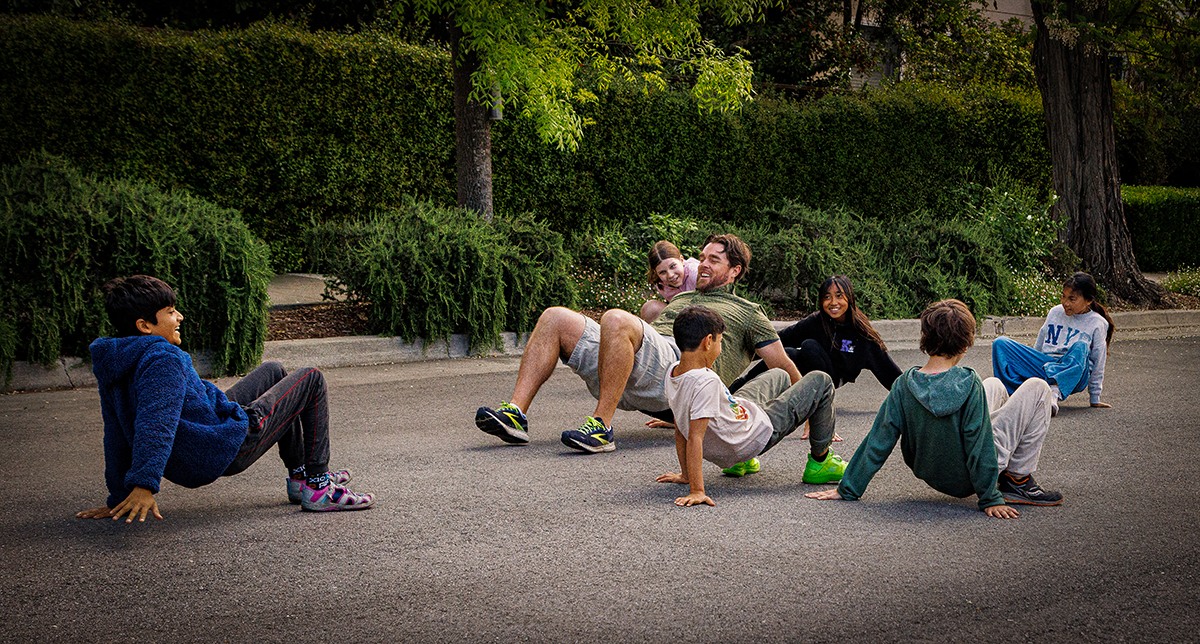
Then we’ll sit on the rocks at the end of the street and close our eyes. There may be one or two kids who’ll peek because they’re antsy and ready to keep moving, but the others will be deep into what they’re experiencing. They’ll be listening to the sounds of birds, and they won’t open their eyes even if bicycles go by. They’re feeling the sunlight and warmth on their foreheads, and when they open their eyes they are calm and absorbed in the trees and sky, and they’re happy.
As we get up to walk back to the classroom we’ll do more calisthenics, so we’re engaging the body with stretching and flexing, and I feel it’s a great help to what we’ll be doing when we return to the classroom, which is harmonizing our voices through chanting and singing, just before math class.
The kids and I play various instruments. I’ve created songbooks for them, and they’ve added songs that they like. During the songs, they can stand and do movements, and maybe they’ll be silly and ridiculous but playful while they’re singing. What’s happening with all the happy movement and singing is that it’s moving energy from their body to their feelings and upward, out through the throat.
I’ve come to a point where I realize that once their energy has been exercised, they’re much more ready to engage their minds. But it’s harder to be mental and flex their brains if they haven’t first flexed and relaxed their muscles and gotten their feelings moving.
I find that raising their energy and moving their energy around by exercising allows them to be more engaged with the mind when we sit down to do math.
Now that they’ve got energy going and they’re feeling relaxed and calm and focused and happy inside, we’ll start doing math.
We’ve done these morning activities long enough that it’s easy to see how they take the kids into a positive state of happy learning. And because we do them every morning, we’re coming back to the basics daily, and I feel it’s wonderful that they are getting these very useful skills early in their lives.
(We’ll continue the discussion in Part 2.)