
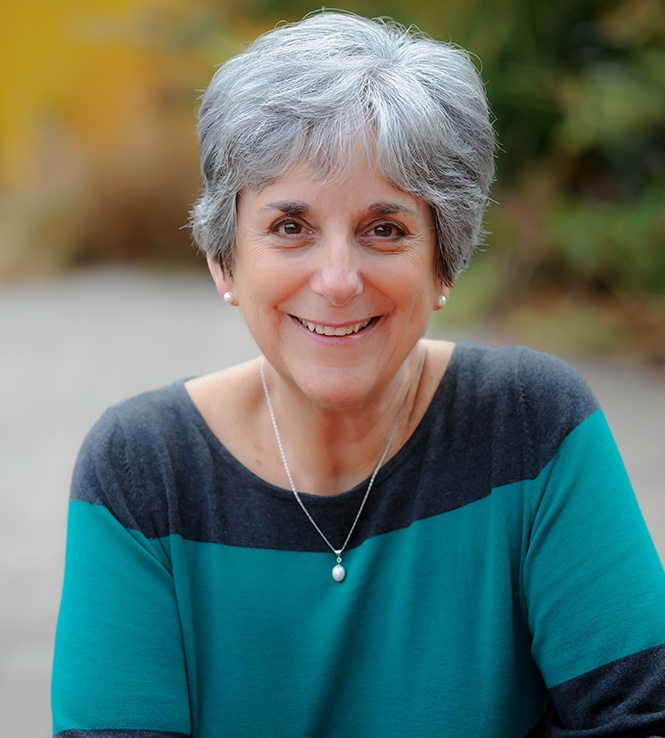
Helen Purcell served for more than 20 years as director of the Living Wisdom School in Palo Alto, California. In her 50-plus years as an educator, she taught language arts at the elementary, high school, and university undergraduate levels. Helen retired from teaching in 2024.
 Q: Our subject today is your life in education: what you’ve learned, and the experiences that persuaded you there might be a better way to help young people.
First Principles
Helen: As part of the requirements for earning a teaching credential, I did student teaching at a community college in Santa Monica, California. As a brand-new teacher, one of the most exciting discoveries I made was that the relationship between the student and teacher is golden.
Q: Perhaps “golden” deserves further explaining. Do you mean that the student-teacher relationship can influence the depth and breadth of learning?
Helen: Yes, emphatically. There was a young man in my class who was extremely bright, but he told me, “I’m not sure I should be taking your class. I’ve been living on a Pacific island for many years, and I hardly know how to speak English anymore.”
I told him, “I can tell by the way you’re speaking that you’ll do just fine, so hang in there and I’ll help you.”
As it turned out, he didn’t need a great deal of help from me, but because I’d been willing to help him, he was wonderfully supportive of what I was doing, and it made me powerfully aware of the importance of making a connection with each student.
I then taught for several years at a community college near Chico, California, in a remote rural area of northern California.
The college attracted lots of adults who wanted to have a first experience of college, as well as young people who were just out of high school. And because it was such a diverse group, I quickly realized that regardless of the subject you’re teaching, you are always teaching to the individual, because you need to consider their individual needs, which may be very different from your own – and that if you ignore the differences, you will absolutely miss your goal of helping them, with their unique life stories and their unique talents and graces.
Later in my career as a teacher, I would discover that this is an absolute bedrock principle of Education for Life, where we are profoundly focused on getting to know each student, so that we can help them move forward in the best way, starting where they are.
After teaching for several years at Chico, I taught at the University of Portland, and then at another community college in Oregon.
I then decided to earn a high school teaching credential, because I felt it would open up a realm of teaching that was extremely interesting to me, and that had always been dear to my heart.
I knew that the teen years are an extremely important period in a young person’s life, and I felt that there must be better approaches to preparing teens than the practices that were common in high schools at the time.
The Magic of Mixed Classes
The first high school where I taught was in a suburb of Portland, Oregon. Most of the students came from white middle-class families. Some were just waiting to leave school and get a job, while others were planning to enroll at a community college or state university, and a handful were hoping to be accepted at a major university.
I taught a class that included freshmen and sophomores. It was a wonderful experience, not least because the freshmen were learning social skills from the sophomores, which reduced the behavior problems.
In time, I realized that the school had been extremely wise to combine the classes, because a great deal of learning was being transmitted between the age groups, completely apart from what they were learning from me.
Being able to count on the students to help each other was a revelation, and in the years that followed I spent a great deal of time thinking about how I could incorporate it into my teaching. The camaraderie between the teacher and the students, and between the students, energized the experience of learning.
In Education for Life, we find that it works extremely well to have mixed classes where students of different grades and ages are learning together, because it creates a sense of responsibility in the older students that helps them develop a mature, inclusive outlook, and it helps the younger students both socially and academically.
It also made me aware of the wonderful sense of family that can develop in a classroom where mixed ages are learning together, even in a metropolitan high school with more than 2000 students.
Growing Together
The administrators had also been wisely inspired to divide the school into smaller units so that the same students would be learning together for the first two years. It made the transition to high school easier for the freshman, it allowed the teachers to form closer bonds with the students, and the older students developed a mentoring relationship with the younger ones.
The administrators were also intent on creating pathways for communication between the teachers, so that there would never be a student who was having trouble in math, for example, where I wouldn’t know about it, even though I was teaching English.
To that end, the administrators scheduled a time for the teachers to get together weekly to discuss what was working for each of the students. A staff psychologist also came to the meetings to offer insights and suggestions.
This is another extremely strong feature of Education for Life, where the teachers are constantly talking with each other, so that they are intimately aware of what’s happening with every student in the school.
Being Real
Another lesson I learned while teaching in college and high school was that the more human and real you are with your students, the less distance there will be between you, and that there is a quality of naturalness and friendship that is absolutely essential for teachers, if they want to be as effective as possible.
In graduate school we were not taught how to form those critically important relationships with the students, even though it was one of the most priceless lessons I had learned from teaching in high school and college.
In our graduate-level teacher training classes we learned about the sociological characteristics of various cultural groups, and so on, but we were left utterly in the dark about the most important thing of all, which is how to create bonds of trust based on understanding the individual student’s needs and nature, so that you can help them most effectively, regardless of the class size.
One Student, One Voice
One of the first things I did to make the classroom more human, and to transform it into an incubator of good energy and open communication was to arrange the desks in a semi-circle instead of in rows. It meant that even though I was the guiding presence, I was no longer the visual center, and because the students were facing each other, it encouraged communication.
I made a special point of encouraging every student to have a voice. This isn’t something that happens naturally unless you encourage it. In most classes, you will have academic superstars who will be engaged and do most of the talking, and then you’ll have kids who are natural communicators and enjoy speaking, but you’ll also have quiet ones, and you need to find a way to reach them and give them the energy they deserve.
Going Deeper
At the time when I began teaching high school, the founder of EFL had recently published Education for Life: Preparing Children to Meet Today’s Challenges, and I was thrilled to discover that he had put words to many of the lessons I was learning as a public school teacher, and that he had built on those ideas and taken them much farther.
For example, he suggested that as educators we should ask the most basic, important question of all: “What is the point of our lives?”
The answer he offered was that what all people are seeking, behind the colorful multiplicity of their stated motives, is to experience greater happiness, and to avoid suffering.
For high school students – and also for younger and older students – finding their own unique way to be happy will never be only about getting good grades. It needs to include the whole person, and all of the ways they are uniquely relating to their lives and to the world. And a major step toward learning to be happy and mature is to learn to relate to the realities of others.
When you can help young people acquire those very important skills, it changes everything, because being able to relate will directly affect the child’s ability to be happy, to do their best at school, and to succeed in their career and relationships.
We Grow at Our Own Level
It wasn’t long until I began to notice that when the students felt that they were seen, valued, and included, the kids who weren’t among the academic superstars also began to shine.
Kids are more aware than we often give them credit for, and when they entered my classroom, they very quickly realized that the school equation had changed. I don’t think they were always consciously aware of this, but I made it a bedrock principle that I wanted to give them a great experience of school, and I wanted to help them know how valued they were.
One of the ways I invited their participation was by asking the kids to give me their feedback at the end of the year.
I said, “What did you like during the year? What worked for you, and what would you suggest I could do that would work better for you?”
They could choose to write their thoughts, but because we were easy with each other by the end of the year, many chose to share their impressions aloud.
I would say, “Everything you tell me will be valuable, so go ahead and say it.”
There was a girl in one of my classes who was autistic. She had two areas that she loved. She knew all about Star Wars and the Bible. So I made her the go-to person in our class whenever we needed information in those areas. It came up surprisingly often, and nobody ever teased or harassed her, whereas she had been treated brutally in the past, to the extent that she was afraid to walk down the hall alone between classes, and I would take her arm and we would walk together. But in my class, she had a special place.
Unlike her other courses, she didn’t need an aide with us, because she was valued, and it helped her be more independent. I made whatever accommodations I could, but she felt thoroughly accepted, because the truth is that the other kids had learned to accept and value her. When I asked for their feedback at the end of the year, she spoke up and said, “This is just the best class!”
When a young man raised his hand, I said, “I’m so glad you want to contribute, because we don’t hear your voice often enough.” I said, “I know from reading your work that you have good ideas.”
He said, “I would never speak up in any of my other classes.” When I asked why, he said, “Because no one makes fun of anybody in this class, and in my other classes I wouldn’t get out more than two or three words before somebody would be putting me down.”
I said, “Is that true?” And when the whole class nodded, it broke my heart, because I realized that in four years he had never experienced the kind of acceptance that empowers kids to grow freely and go far.
Celebrating Successes
Teaching in a public high school, I had many experiences that showed me the deep value of the principles we practice daily in our Living Wisdom Schools, and how powerfully those principles can affect the students’ experience of school, and how they free them to do their best, academically and personally.
A prime example is how we recognize our students’ growth at the Qualities Ceremony that is part of our End of Year celebration.
The teachers honor each student with a positive quality that the student has developed in the previous nine months. They are qualities that reflect maturity. For a child who genuinely understands right and wrong, for example, it might be the quality of Justice. Or it might be Friendship, Kindness, Courage, or any quality that you would wish for a child to develop as part of becoming a confident, happy, mature and capable person.
At the End of the Year ceremony, each child, including the youngest ones, will stand up and say a few words about their quality: how they understand it, how they’ve worked on it, and how they feel about it.
I was still teaching in the public high school when I got the idea of celebrating the students’ successes at the end of the year by awarding them with qualities. I asked the office staff to help me print beautiful certificates, and they got into the spirit of it and were delighted to help.
I gave my students individual qualities of Courage, Joy, and so on, and at the final class of the year I explained what I was doing, and I handed them their certificates.
I vividly remember giving one girl the quality of Delight, and how she vehemently protested, “This isn’t true!!!”
I said, “But it is! You are absolutely delightful. I always love having you in my class.”
She said, “No, no! This is not true! I am not always delightful.”
I said, “Wait a second, I’m not saying you’re always delightful. This is saying that you are mostly delightful, and even if you have your off-days, as we all do, I see you as delightful.”
I asked the class, “Am I right? Is she delightful?” And they shouted, “Yes, yes! You are!” And I could see that she was having to take the quality into herself and accept it as a defining part of who she was.
Of course, it was absolutely true, because from the moment she came into the class she had a way of making everything lighter and happier and funnier, and a way of including everybody and being responsive — all of which were qualities that make a wonderful member of a community, and a wonderful learner.
Later, as I reflected on that first informal Qualities Ceremony, I thought, “It’s such a simple thing, and it took so little time and effort on my part, and yet I think it was life-changing for her, and for who knows how many others.”
Does Education for Life Work?
Now, some people may say, “These are soft skills, and they are not what’s going to get you through life.” But I would very heartily disagree, because everything I’ve learned as an Education for Life teacher tells me that when you approach children in a way that acknowledges them as whole persons, and even more deeply in their essence as shining souls, they respond beautifully.
It became the spirit behind every encounter I had with a new student, where my first thought was always, “This is a shining soul. We must acknowledge them as a unique light, and our job is to help them shine ever more brightly.”
How can we do that?
When a teacher is holding those thoughts uppermost in every encounter with a student, it gets communicated both subtly and overtly, and the student feels that their experience of school is much deeper, and more personal.
When I was a little girl, our teacher would give us gold stars for good behavior or penmanship. It was a formal system of external rewards. You can have a reward system in an Education for Life school, too, but it will take on a very different meaning, because it’s about your individual relationship with each child.
One child needs to learn to believe in herself. Another child needs to learn to respect others and believe in them. Whatever the lesson, it’s always individual.
I believe this is another major point in favor of EFL, that it’s so amazingly real, because it’s based on helping each child where they truly are, and according to their nature.
At the big high school where I taught, I was able to accomplish a great deal by teaching to the individual students in my classroom. Yet there were powerful outside forces that wanted us to march along in orderly rows.
There was a young girl in my class who was very popular and well-liked. She was a cheerleader and part of the homecoming queen’s court, and she was very bright. At the same time, her whole life was geared toward getting a super grade-point average and going to a great college. And because she was measuring her success entirely by grades, she didn’t get nearly as much from my class as the other kids.
For her final exam she wrote an essay that was acceptable, but not great, and after a great deal of careful thought, I gave her a B-plus for the course, even though I knew she would be disappointed. Sure enough, she came to me and said, “I need an A! Why didn’t you give me an A?”
I explained that an A is something you earn by going beyond simply regurgitating the information — it indicates that you’ve engaged with the subject, that you’ve taken it in and made it part of your awareness in a creative way.
But she wasn’t satisfied, and I wasn’t surprised when I got a call from her father.
I felt a great deal of regret for her, not for the B grade, but because the other kids had grown so much more, each at their level.
Education for (Real) Life
Our class included students from typical middle-class families, as well as some who had come to America as immigrants and refugees.
We were discussing immigration one day, and a boy from a white middle-class family made a negative remark about Asian people who were seeking refuge in this country and taking jobs, and so on.
There was a girl from Laos in the class, and I thought, “Oh my, where am I going to go with this?” But before I could say a word, the Laotian girl spoke up, which was remarkable in itself, because she had never spoken in class.
She said, “For your information, I am a refugee, and I have as much right to be here as you do!” The boy stammered out a response, but the class came together and confronted him with the flaws in his reasoning.
I was so proud of her, that she had felt sufficiently free and courageous to take him on. She said, “By the way, if you go back far enough, you’re an immigrant, too!”
I believe that the freedom to engage with real-life issues is at the core of an Education for Life, because true education isn’t only about mastering information, it’s about mastering how you want to live your life, and how you can be a good person, and how you can be part of a family and part of a workforce.
Of course, it takes a great deal of hard work to master a professional field, but in the end I believe that a successful life comes down to certain universal and indispensable principles — that if you want to be truly successful, you must be honest with others and with yourself, and you have to value others and search for the highest in yourself and others and behave accordingly.
When you fall down, you have to be able to pick yourself up and try again. And if somebody else falls, you don’t gang up on them, but you go over and say, “Let me help you.”
We see that behavior in our school daily, because the culture is based entirely on being able to tune into each other’s reality. If a child skins a knee, everybody runs over to help. They use the tools we’ve given them, and then the teachers will come over, and the children will make way, because there’s a tremendous respect that’s based on the caring and love the teachers have for the children.
I marvel at the good fortune of the children in our school, because they are allowed to be who they are, and they are given every opportunity and support to grow into their own fullest nature.
The children in our school are very individual, and they will always need one or another kind of special help. While they don’t always live up to their highest potential, their highest is what we are always holding out to them.
If children get into it with each other, as they will, we guide them to understand, “That person’s reality is different from mine, and it isn’t necessarily bad.” In that way, they learn to navigate even very nuanced situations on their own.
The teachers have earned the students’ respect, so they are able to involve themselves at a deep level with their students, because they are honest with them, and they love them.
If a child feels loved and seen by someone in authority, the fences around the heart go down, and then the child can take any kind of correction, because they know that it’s being offered by a friend who wants to help them.
Creating a Safe School Environment of Growth and Joy
Q: I’ve been struck by the atmosphere in the school, and how it seems to harmonize lots of things.
Helen: I couldn’t agree more. When I began teaching here twenty-odd years ago, I met with a group of parents who were wanting to learn more about the school.
Afterward, a woman stayed behind. She told me, “I have a confession. I’m not a parent, and I don’t have a child for your school. I’m a spy.” And of course, that got my attention.
She continued, “I’m a psychologist. I’m working on my PhD, and I used your school as part of my research, but I need you to know that your school is very different from other schools.”
She said, “When I came through the gate I felt a change in the energy, and I didn’t know exactly what it was. But then I saw the children walking between classes, and every single child had a smile on his or her face.”
She said, “Then I understood where the mysterious energy came from. It’s because you have happy children.”
I said, “Well, that’s true. The children who are in our school are basically really, really happy.”
She said, “You have no idea what it’s like, by comparison, to go into some of these other schools.”
“Oh, I do,” I said – “from the children who come to us from those schools. They share their experiences: the lack of freedom, the bullying, the cliques, the competition, the stress.”
I believe that when you see children as souls, and not just as their personalities, it deepens and expands the relationship. When you visit the classrooms here, it strikes you that the students aren’t afraid. There will be times when they aren’t able to rise to the highest level they could, but the overarching truth is that they are loved, and when you take fear out of the equation, almost anything is possible.
Encouraging High Aspirations
A keystone of our philosophy is a principle we call “directional relativity.” It’s the idea that everyone in the world is seeking happiness and freedom from suffering, and that the only way we can get those things is by working with ourselves exactly as we are, in this moment, right now.
So we are all moving in the same direction, toward greater happiness and freedom, but we’re going forward at our own pace, starting from the unique place where we are.
I don’t think I could walk into a classroom and be an effective teacher without having that principle firmly in mind, that you are always looking at the individual child, with a very clear understanding of where they are, and then you’re imagining where they can go, and you’re helping them move ahead in that direction.
So there’s a sense of directional progress, but without a fixed timeline, and you’re always tuning in to the individual child and evaluating their points of readiness.
A child takes a test, and they’re upset about their grade. We don’t see that as a bad thing, because it signals that they want to improve. So the teacher will give them lots of encouragement and support. “I love the fact that you want to do better!”
It’s the idea that we are always wanting to move forward, starting where we are, at the level of our own abilities, without the slightest sense of being judged, and we communicate that security to the children through our expectations, our language, and our support. It all works together in the child’s favor, and when you can communicate that sense of support and faith and promise, there’s no telling how far the child can go.