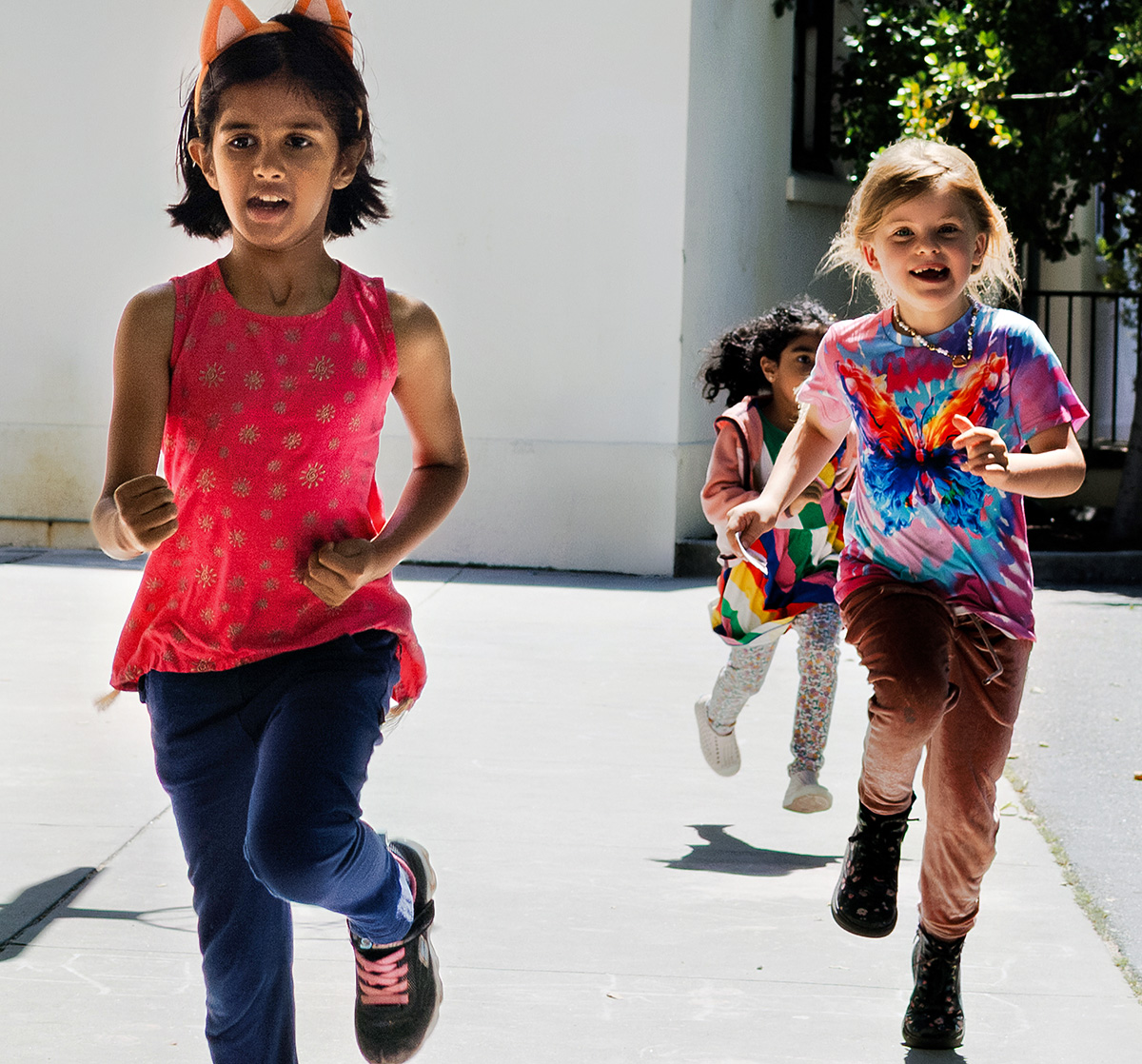
A conversation with David James, Martial artist and Education for Life PhysEd specialist at Living Wisdom School of Palo Alto, California.
Q: David, what was your childhood like? How did you find your way to become a PhysEd specialist teacher at Living Wisdom School of Palo Alto?
David: I grew up on the south side of San Jose, California. It was a rough area, what most people would call “the wrong side of the tracks.”
I have two brothers and a sister, and my parents adopted children. So I grew up in a house that was always very busy and full of kids. We were the house where everyone brought their friends, and on Saturday morning you would wake up and find a slew of people in sleeping bags all around.
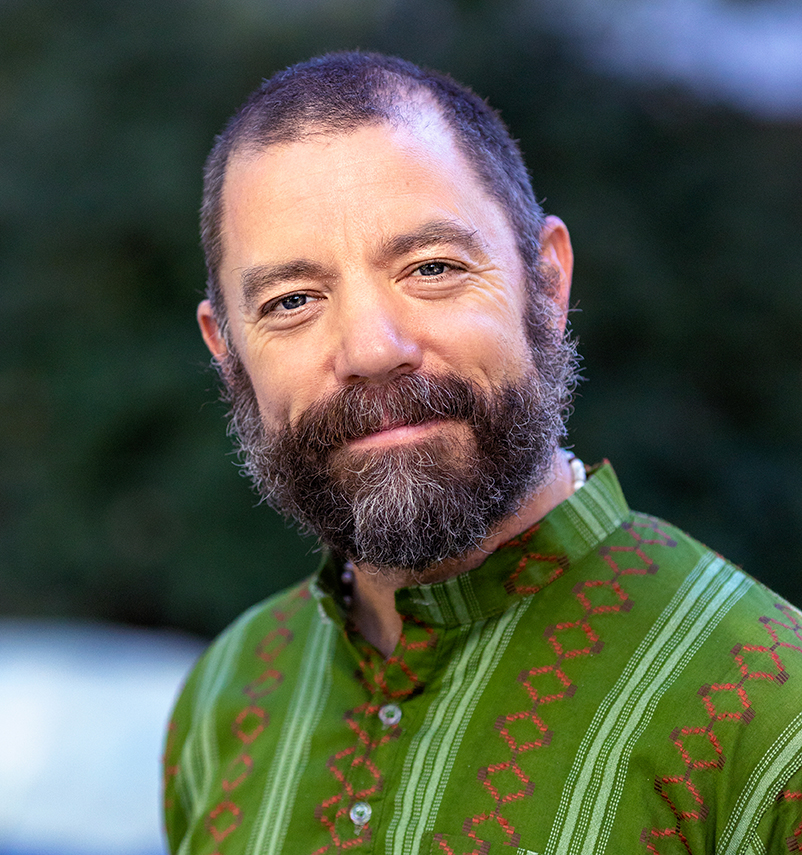
I was the youngest, and as the little brother I was constantly getting picked on and pushed around, not only in our house but in the neighborhood, and I was scared a lot. It was why martial arts movies were huge for me – I vividly remember the Bruce Lee and Jackie Chan films, and Kung Fu Theater on Saturday nights, where you could watch a double feature of old Hong Kong “chop-socky” films. What resonated with me was watching how someone could stand up to a host of enemies and take care of himself and walk away as a hero.
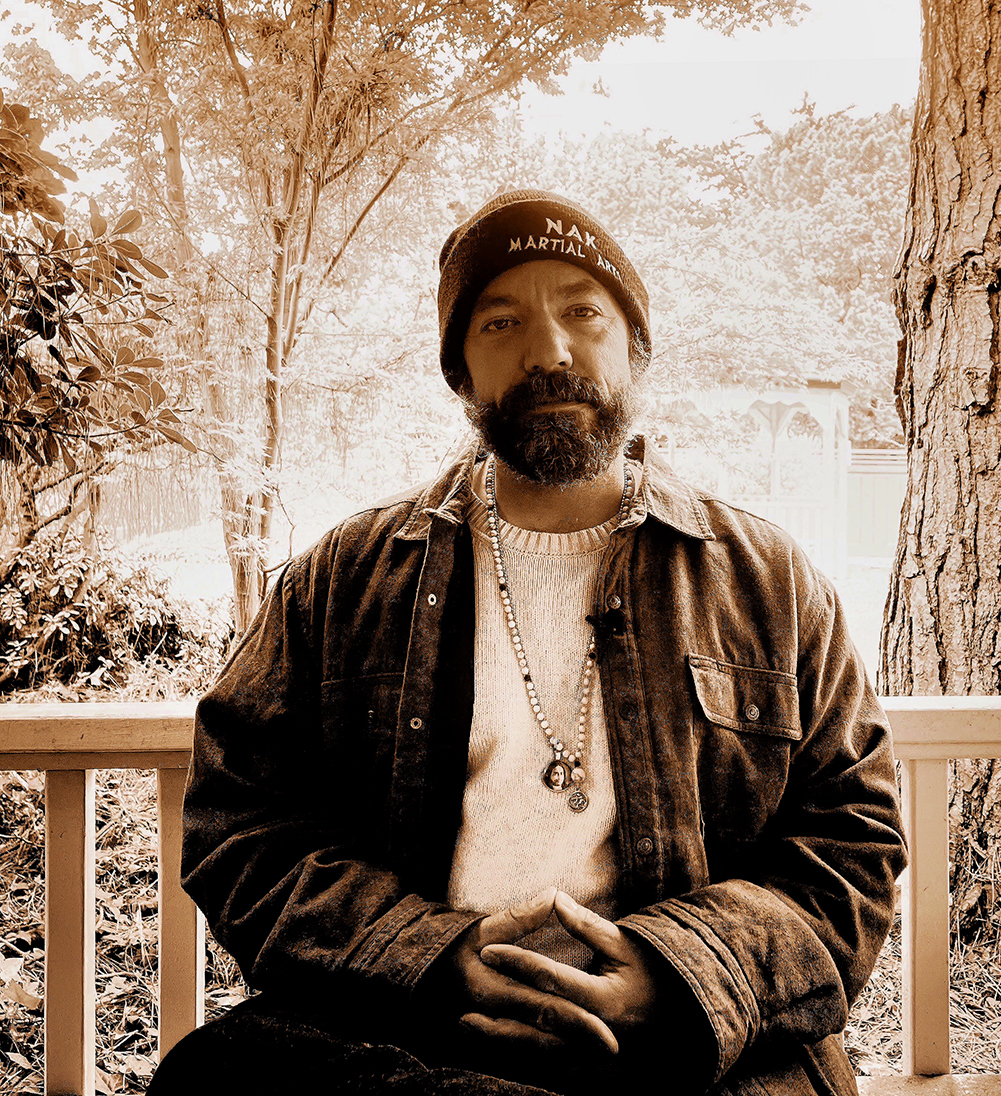
I always knew that I was a martial artist, even though I didn’t start my training until I was eighteen. There’s an early photo of me setting off to kindergarten carrying a lunchbox with a picture of David Carradine, the actor who played the wandering peaceful warrior monk in the Kung Fu TV series. To this day, those stories continue to play a part in the way I think of my practice, and when I teach I still quote from the Kung Fu series, because those lessons resonated so deeply, and I believe they are true.
David Carradine and his ancient teacher, “The Wise One,” said many wonderful things, and I believed in that philosophy, even more than I believed in the martial arts. The philosophy always appealed to me deeply, and I loved the scenes in the temples, with their austere ways.
Growing up, I saw that martial artists often ended up on a spiritual path, so meditation and the martial arts were always linked in my mind. The martial arts have been a moving meditation for me. There’s an inner meditative sense in my practice that has unfolded naturally over the years, and I believe it explains why so many martial artists eventually find a spiritual path.
Some of the people I started with were very tough guys. They were gang members, or they came from countries at war, and they were ready to fight and win. I’ve been friends with those guys and gals for decades, and they’ve all become lovers of God. We’ve matured in spiritual ways that you might expect, if you hadd known us when we were young.
One of my closest associates is a big, tough guy. We were buddies when he joined my class, and he moved ahead swiftly, because he was very skilled, and he became a champion.
Early in his career, we went to a tournament where he snapped his tibia and femur, his thigh and shin bones, just snapped them in half. He called me afterward and said, “Sifu, I don’t know if this is worth it.” I said, “You know, I totally get it. I absolutely get that.”
Several days later, there were maybe forty of us in the dojo, when he came hobbling on crutches. I’m not sure if he came to say goodbye or to grab his stuff, but he walked in on crutches and the whole school stopped and turned around and started cheering. And you could see that our support was exactly what he needed.
Not the win, not the trophy, not even his body being whole. It was everybody celebrating that even though he had lost, he had lost moving forward, and to this day he’s a high-ranking instructor who has two schools.
It was such a poignant moment for me to witness that lesson happen for him, and I’ve seen many moments like that, that have encouraged me to continue. So it was easy to fall in with the methods of Living Wisdom School, because, as I’ll explain as we go along, they are what I’ve always believed in.
I’m now teaching the junior high kids. I teach them one day a week for an hour and a half – so, sixth, seventh, and eighth graders – and I’m seeing many lessons from the martial arts reflected in my teaching.
I started two years ago with the third graders, and I loved it. A major part of our work together was about teamwork, and how much fun it is when we include everyone, and how much more we can grow and have fun when we work together.
With the middle schoolers, there’s still the focus on teamwork, but the emphasis has shifted to where it’s more about the individual, because they’re entering a stage where they are wanting to develop a strong self-definition, and I’m helping them find their individual identity through exercise and play.
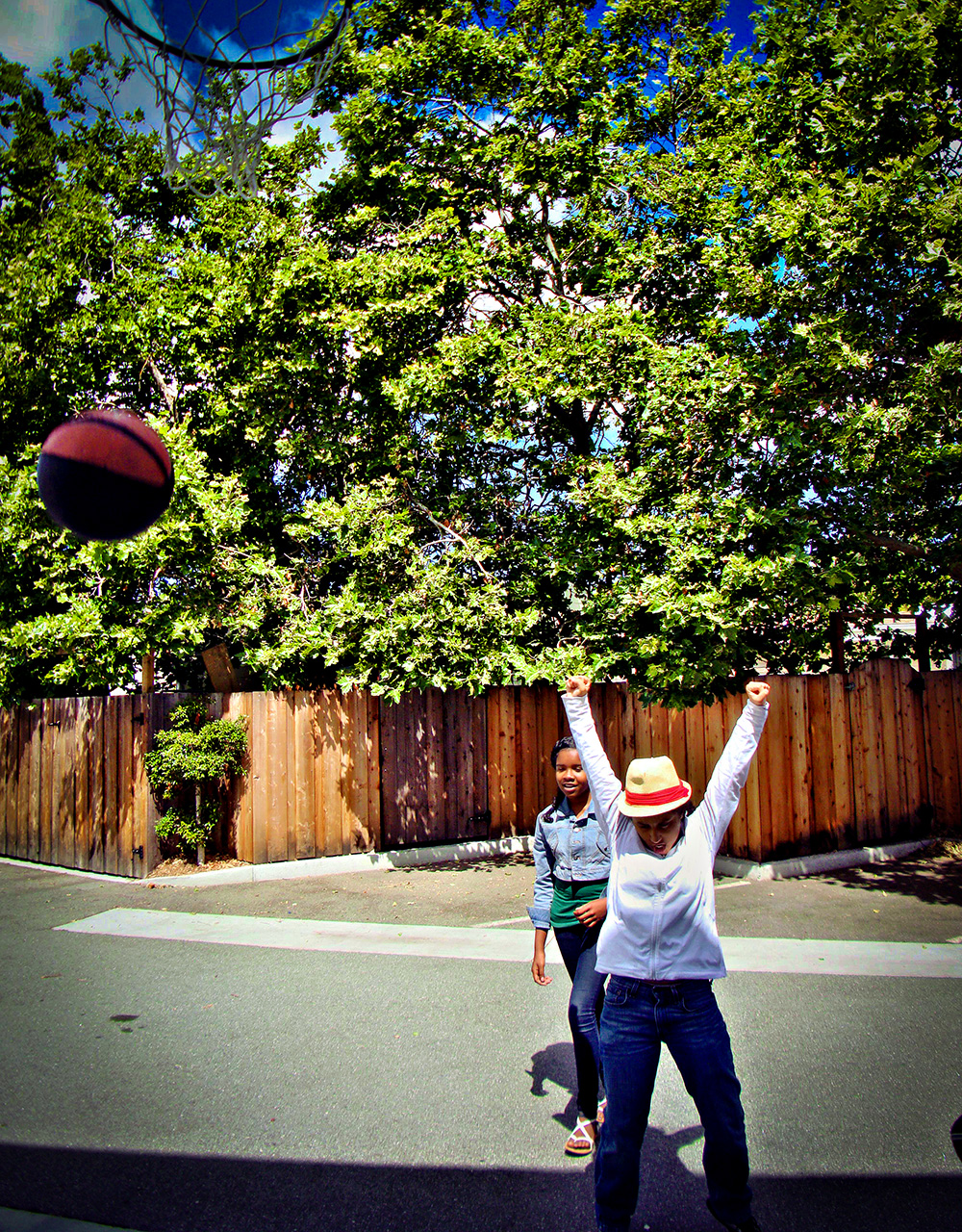
Max is a young man who graduated from our school this year. When I met Max, he would say things like, “PE isn’t my thing – I’m not good at that physical stuff.” But this year he realized “I can throw a basketball pretty well – I can run fast, and I can make baskets.” It’s been fun to see him discover his physical skills, and in the process he’s learned a great deal about himself and his strengths, and his confidence has grown.
He’s learned how satisfying it is to tackle something new in a spirit of adventure. When we would talk, he was happy and impressed with his progress, and I was happy to see how PE had helped him learn to try new things and discover what else he might be good at. It’s wonderful to be working with the kids this way, on their individual growth.
Q: They’re entering the Will Years from 12 to 18, and they’re leaving the Feeling Years from 6 to 12. So they’re coming into a stage when they’re wanting to build their confidence in preparation for high school and beyond.
David: That’s right. And I don’t mean to be disrespectful, but the kids here in Silicon Valley are generally privileged. Their parents are very often in tech, earning good money, and in the youth culture the kids don’t experience much pure play.
They might get sports training – they’re climbing, playing tennis, or fencing. But they’re in a culture where they don’t go outside and play with their friends. When they have play dates, they’re locked into video games, and going outdoors isn’t what they want to do.
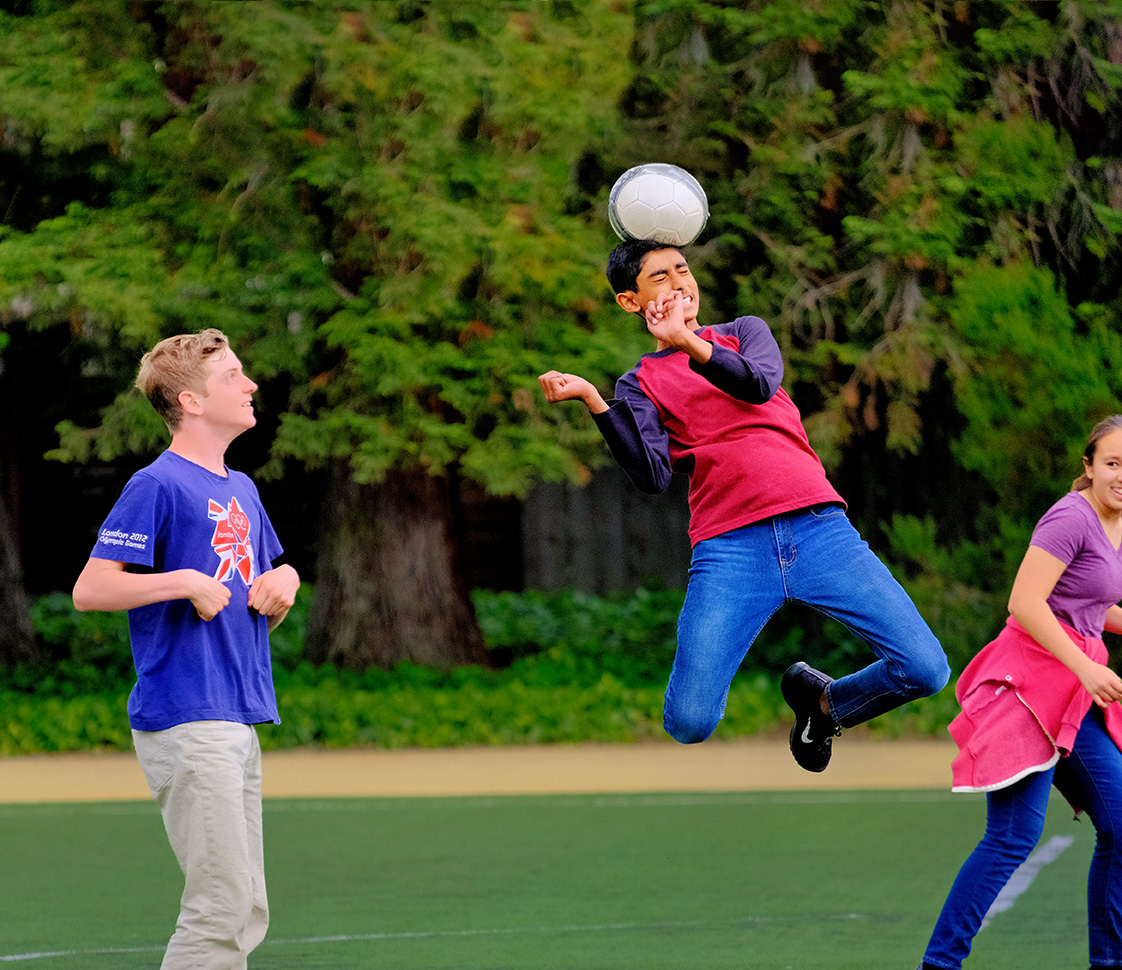
When I use the word “sports,” I’m referring to exercise as pure play. For example, I’ll teach them the fundamentals of basketball, but if they ask me, “What’s the score?” I’ll tell them, “I don’t know.” Because it isn’t the important thing. What matters is that PE is a wonderful classroom for helping kids develop valuable personal skills.
For example, they learn how much fun it is to support each other. If a player does something well, even if they’re on the other team, they’ll shout, “Nice job!”
It’s fun to see someone like Sriram, whose confidence wasn’t terribly high for sports in third grade, and I’ve watched him discover that he’s actually good at basketball.
It’s wonderful to see him play, because he’ll make a basket, and he’s happy, but it’s even more wonderful when everybody’s coming over and high-fiving him, “Great job, Sriram. That was beautiful!”
It’s wonderful to see him growing in confidence and belonging. “I did a cool thing, and I have the respect of my peers.” But it’s also wonderful that all of the kids are supporting everything that’s going on, whether it’s working for their team or against them. It’s been a beautiful journey to watch them develop that level of maturity, where there’s tremendous individual growth in confidence, but there’s also appreciation, connection, and an ability to relate to other people’s realities.
When Amelia started with me two years ago, she would step out of almost every PE class, often in tears, “No, I don’t want to do this.”
I would say, “That’s fine, you can sit this one out, but I’ll need you to come back when you’re feeling better.”
At the end of this year she was actually catching balls, where she would formerly be cowering in fear to protect herself while the ball flew past. Now she’ll catch the ball and feed it to another player, which is a big step for her, and she’s feeling confident and connected.
There are still sports that she’d rather not do – she doesn’t like projectiles flying at her, in Frisbee or football, but she’s trying hard, doing what she can, and maybe it isn’t much, but all progress is directional, isn’t it?
Q: There’s an expression for it in sports – “RFP” – relentless forward progress, where it doesn’t matter if your crawling or sprinting, so long as you’re moving forward in a positive direction of growth.
David: Absolutely, and for Amelia it’s huge that she’s moving in the direction of palpably increasingly confidence, one small step at a time.
She’s stepped into participation, and in large part it’s because everyone is supportive. “You can do it, Amelia! You’ve got this!” When she’s at bat in baseball, everyone’s shouting, “You can do it!” And if she does something well, like catching a basketball and passing it – “That was awesome, Amelia!” Because they all know the abilities of each one, and they know where each one’s personal victories are.
That’s what I love about PE in an EFL school, that it’s always about the individual, and encouraging their growth at their own unique level. So everyone’s growing and happy, and the atmosphere is great.
At the end of the year, when they stand up and give their Qualities speeches in front of an audience of several hundred students, parents, and relatives, almost every one of them will mention energy.
“I realized that I could raise my energy.” “I learned that I could change my energy.” “I discovered that I could work with energy and take control of my happiness.”
Working with energy is something we all understand here in this school, yet I can’t remember ever thinking about energy when I was young, or being taught that I could raise my energy and use it to change how I felt.
The idea of energy plays a major role in our students’ lives. I see them applying it every day in PE. They’re using what they’ve learned in the classroom about how the quality of their energy determines their ability to be happy and succeed.
In PE I see the kids rallying their energy in the team, or changing their energy to make their attitude and thoughts more upbeat and positive, or investing enthusiasm, focus, and will power to create fresh energy.
Q: Years ago, I worked at a small organic market at Ananda Village, and I remember how the kids from the original Living Wisdom School would come in for snacks, and how great they were.
We never had behavior problems with them, and they were cheerful and able to get along. But there was one girl, Brooke Dunwoody, who had graduated and was now in high school. She would come in after basketball practice, and even though she was just a third stringer on the team, her energy was awesome, and it was from doing sports. Not that she was bouncing off the walls, but she was a glowing, magnetic human being, and I felt it was a powerful illustration that there’s something about sports that can help young people define themselves in a strong positive way.
It seems to help them discover their identity. When you’re fit and you have energy, you feel that you can do anything. Also, you’re creating a body that not only nourishes itself with energy, but it’s feeding energy into your feelings, will power, and mind.
David: That’s absolutely true. As a young boy, I was always afraid, but when I played sports I could relax and lose myself in the game, because it was an equalizer. It gave us a safe place where we could all grow and put out lots of energy and discover our strengths and get along.
We played year round, whatever sport was in season – soccer, American football, basketball, baseball. And I don’t like to say “playing sports” so much as that we were just playing, which included sports, and I found that the fears, the worries, and the concern for my personal safety were gone. It was like a meditation, and of course I didn’t have that word, but I knew I was happiest when I was moving and playing and feeling inwardly harmonized, focused, and strong.
I’m seeing lots of worry in kids today. I see the test anxiety, and the tremendous pressure to succeed. I see that they have the same pressures on them to perform that the grown-ups have, and it breaks my heart.
I feel that if we can teach them to play in the way that nourished me so much as a boy, it will help them neutralize the negative effects of the stress and tension, and they will come back into themselves and find happiness and wholeness and fulfillment.
It’s why my biggest concern isn’t to teach them a sport, or teach them something they can be the best at. Because many of the kids are already very good at something. They’re old enough that you can see that they’re on their way to being engineers, doctors, physicists, entrepreneurs, and so on. But I want them to run. I want them to go outside and climb a tree.
There’s a small group of young ladies in my class, and when I started two years ago, they weren’t the slightest bit interested in PE. Like most junior high girls, they wanted to sit and talk together during breaks and lunch, and there wasn’t much movement.
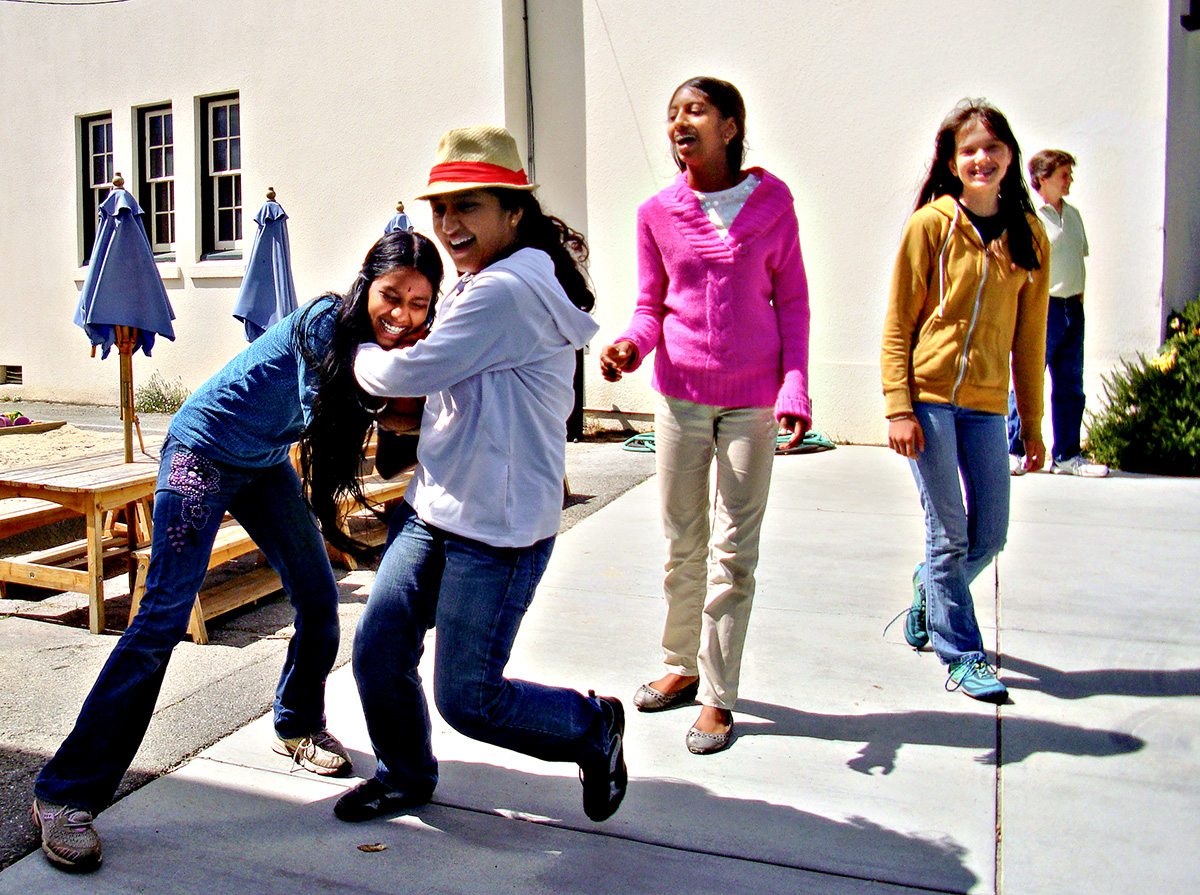
But now those same girls are playing basketball together and enjoying it. They’re playing, which is sadly uncommon today. And that’s really all I want these kids to do. I want them to learn how to play, instead of only aiming to excel at a sport so they can get a certificate, a trophy, or a prize they can mention in their college application.
Most of the kids don’t play basketball or Frisbee on their own, because they’re scheduled for an hour of fencing after school, then an hour of piano. And when they get those scheduled, serious jobs done and it’s time to relax, they don’t want to do anything but lounge around with a video game.
My goal is to share as many experiences as I can with them, so that someday maybe one of them will think, “I actually like running around the track and out in the woods.”
We did some martial arts this year, and as part of the program we ran on a track. For some reason, my wife, Leti, has always loved running around a track, and I’m the same. Some of us love it, some don’t, but if we don’t give them those experiences, they’ll never have a chance to find out what they love.
I want them to discover exercise as fun. “Let’s go for a hike. We don’t need to raise our heart rate, because we aren’t trying to win a trophy. Let’s just go have some fun, guys.”
That’s my approach. Have fun, put out energy, try something new, fail at it, and learn. Maybe we aren’t terribly good at first, but we’ll have lots of fun playing and learning.
I’ve seen that the kids who’ve gone along with me are enjoying it and growing. If a child who isn’t used to shooting a basketball wants someone else to take the shot, I’ll encourage them to try anyway, whether it misses or not. And then the other kids will go, “Yeah!” Which is absolutely the point.
What we’re doing is “playground,” not “sports.” They can get into sports if they want, but I want them to have an experience of playground. I want them to discover playground fun, which comes with all kinds of healthy growth and rewards.
We go to Peers Park for PE, and there’s a group of kids, probably eighth graders, who show up every Friday, and they bring a football or a Frisbee or a soccer ball, and they just play. It’s so reminiscent of how I grew up, when the video games weren’t very good, and in any case they were for when you had to stay inside, but we always wanted to stay outside as long as possible, and that’s where I’m trying to get these kids to want to go, outside.
Q: I didn’t exercise until I was twenty-six, and as my body got fit I realized that I was stepping into an entirely new world of its own, the world of the fit body, and I realized that it was a world that I had never entered before, and it was so exciting. It was like stepping into a big, expansive part of myself that had been closed before, with wonderful new, undiscovered strengths. It was huge fun to explore that new world, and once I achieved basic fitness I began to expand my distances. And the point is that it was a wonderful adventure, and I suddenly had so much energy that I could use.
My thought is that the present system of education, and what the parents and government and administrators are doing with this foolish conspiracy to make academics the whole of every child’s life is seriously misguided, because it ignores fully three-quarters of what is really, really, really important for a child’s overall success and their healthy growth in body, feelings, and will – and then finally the mind.
The founder of Education for Life and the Living Wisdom Schools, Swami Kriyananda, pointed out that unless you can bring lots of feeling and will into academics, to the point where you want to learn, and you’re curious and enthusiastic, you’ll learn much less, and you’ll be disengaged, and probably bored out of your mind.
So it could even be argued that the body and feelings are more important than the rational faculties, because you may have a wonderful mental ability to twiddle numbers and manipulate gadgets, but the quality of your life will be largely determined by your body, your energy, your will power, and your feelings. And I think that for kids to get those lessons early in life is incredibly valuable, because their life’s progress begins with those important lessons of the body, feelings, and will; and the mind only comes after those natural stages in their development. I’m not suggesting that academics shouldn’t begin until the more deeply focused Mind stage, at age 18, but that there are other critical tools that they need to develop along the way, and that will complement, deepen, and empower their progress and success in their academic studies.
David: Yes, and it affects how well you can access your best in everything you do, including sports. I mentioned fencing, because many of the kids in this area fence, but I believe it’s mostly a way for the parents to drop off the kid. “I’m busy and I want you to be supervised and busy, and I’ll come get you.”
Also, I’ve never met a fencing instructor who wasn’t keen on winning, and of course in most sports the goal is to win.
I think that’s what’s in kids’ minds these days, especially here in Silicon Valley, which is the tech navel of the world, where everyone is completely goal-oriented, and having fun isn’t at the top of the list of what kids are expected to do.
There’s always the thought that there needs to be a goal. “If we play this game, what will I get out of it? What will I get if we win?” They want to know what they’ll gain at the end, if they give it their best.
It’s why I’m trying to have them learn to chill, relax, and commit their full energy to playing for a time, and even if they aren’t going to win anything, they’ll have fun and grow by exploring creative ways to use their energy together in the moment.
Q: Because the ability to generate energy and enthusiasm, and be increasingly focused is an important life skill in its own right?
David: Yes, and in our school we’re having that conversation every day with the kids. “We aren’t taking home a trophy, we’re just having a good time – so relax and enjoy it.”
Q: And then all of the personal growth will come naturally.
David: Yes. There are folks who want to enforce the rules – “You double-dribbled with the basketball!” But I tell them, “Look, it’s okay, guys, because we aren’t here trying to bring home a trophy.”
Let them play. There are important lessons and benefits that they all get from what we’re doing. I want the kids to get to know themselves, and to learn how to support each other, and really just have fun, and experience as many things as they can while they’re having fun.
At the park where we do PE, there’s a fence between the playground and the basketball courts, and we climb the fence. Some of the teachers don’t like it, because the fence is a little high. But none of the kids have climbed fences, and I don’t know where you grew up, but when I was little, if you were trying to get somewhere, you almost always had to climb a fence.
Q: Where I grew up, in California’s Central Valley, it was very hot in summer, and when we went to the swimming pool every day, we had to climb over a tall chain link gate, or else walk all the way around a baseball field, on a long, boring path that had lots of puncture vine that we wanted to avoid because we weren’t wearing shoes. The fence was kind of awkward to climb, a pain in the rear, but it was worth it.
David: Yes, as kids we knew how to climb trees and climb fences, and these kids don’t know anything about that kind of outdoor adventure play.
Q: People need to realize how deeply these topics that you’re talking about are embedded in natural law, in the way the universe works, and in the way a whole person is meant to develop and function and grow.
We were all created so that the willpower and mental stages of our natural development cycle, from 12 to 18 and 18 to 24 respectively, don’t come along until after the feeling phase from 6 to 12.
Why? Because if your feelings are properly encouraged and guided and cultivated and refined, you’ll know what you most deeply want to do with excitement and full energy. You’ll have the capacity to want something strongly, and it will feed into your determination to do it at any cost.
You’ll be able to feel what’s right and wrong. You may not be able to express it, but you will most definitely feel it, because your own nature will tell you that it feels awful when you’re doing something that goes against your moral sense, and it feels really good when you’re on the right noble path. So it seems almost criminally negligent that we aren’t honoring that natural arrangement of sequential stages in our schools.
As Swami Kriyananda said, we learn most effectively with the help of feeling, energy, and adventurous challenges.
David: Yes, and the kids in the EFL schools are getting the whole package. When I was in school, I never heard a child talk about energy, or how they could raise their energy, or change their energy, or even that there was energy that we could deal with. We’re pioneering a new approach that will allow schools to honor the way kids are made, which hasn’t changed, and isn’t going to change anytime soon.
Gary McSweeney, one of our school’s founders who taught middle school here for twenty years, says that other schools have begun to adopt our language, because they are quietly noticing how well our methods are working.
Q: The high school entrance examiners frequently call our school to rave about how poised and smart and aware the EFL graduates are.
David: Yes, and those schools might not have changed the way they’re doing things, but the language they’re using to entice the parents is changing, to where they’re talking about getting to know the individual child, and teaching adult skills of openness, acceptance, cooperation, and communication – rather than just droning on about a four-point grade average and college acceptance.
Q: Of course, the parents will still rightly expect excellence, but I believe at least some are realizing that their child’s personal growth at school contributes very broadly to their academic and career success, and that bringing the whole child into the classroom, instead of just their brains, actually accelerates learning, because the kids love what they’re doing, so they’re deeply focused and engaged, and discipline problems virtually vanish.
David: There’s a boy who’s just a freshman in our high school, and he has completed all of college calculus, so he’s exceptionally brilliant, and he wants to pursue a career in physics. But the thing is, he has that little universe of academics, and his growth could stop at those boundaries. He could still be very successful, but I believe he’ll have a smoother path and a better life if he can expand the boundaries of his world.
He’s doing martial arts with me, and we had a conversation recently. He’s really, really good at doing whatever I ask. I’ll tell him, “Raise your finger an inch,” and he’ll go exactly one inch.
I said, “I need you to give me more of yourself. You’re doing great! You’re doing exactly what I ask, but now what do you want to add to it? You need to add your own influence – your own special sauce. Because he’s this tremendously talented math guy, but when you’re doing something physical, there can always be more, and you can do it your own unique, fun way that works best for you individually.
Q: You can bring your own special flavor of enthusiasm, and you can be creative in how you move, and add your own dance steps to the music. People do sports their own way, just as you can identify a person by their way of walking. In sports, there’s room to try lots of approaches and see how they work for you.
David: Yes, there can always be more, and I think that’s why sports and physical movement are so important. There is no cap on how far you can go. You can keep trying, and keep learning from your progress.
One of our girls loves rock climbing, and I’ll watch her start a climb upside down, and she’ll climb up and around the outcrop, then she’ll start scrambling up the cliff, and I can guarantee that she was unable to do that when she started, and now it’s what she does routinely. It’s amazing, and now she’s pushing herself to explore what else she can do, and how happy and confident she will feel when she can finally do it.
Q: That’s a life lesson that she can apply everywhere.
David: Yes, it’s lovely to see how she can push herself and find renewed happiness in succeeding.
Q: There’s another aspect, too, which comes from Eastern wisdom. In 1894, a highly respected yogi in Bengal, Sri Yukteswar, wrote a book called The Holy Science, where he corrected errors in an ancient system of world chronology, called the Yugas. The idea being that human consciousness rises and falls in cycles of 12,000 years, with four “Yugas” in each rising and descending cycle. They correspond to the Greek system of iron, bronze, silver, and golden ages.
Sri Yukteswar said that at around the year 1900 the world would enter the full stream of an age of energy-awareness, which the ancient scriptures call Dwapara Yuga. He predicted a rapid advance of energy-based technologies in the 20th century, which of course has proved spectacularly true. All of the significant inventions of the last hundred years have been based on the new awareness of energy as the underlying reality of the cosmic structure.
He said that whereas the emphasis in the preceding age of matter-awareness, called Kali Yuga, was about fixed laws and fixed customs, institutional authority, and mass conformity, the age of energy is about the individual, and the emphasis is on the growth of the individual.
My point is that we have not yet seen energy-aware methods sneaking into the public school system to a great extent, because the public schools are a giant ship, and it takes immense pressure to turn it around. But there is one side of the campus at every public high school where we are seeing these ideas sneaking in at a dizzying rate – and that is the sports complex.
It’s happening at all levels of sports. An excellent example is the San Francisco Forty-Niners American football team. In 1972, they hired a new coach named Bill Walsh to take over a terrible team that had gone 2-14 in the previous season. Under Walsh, they won the Super Bowl just three years later, and it happened because he was a dynamic, positive-minded leader who knew how to work with energy.
When he was hired, he demanded the authority to turn the organization upside down. His first objective was that everyone, from the ticket sellers to the coaches working with the players on the field, and players themselves, would need to have positive, upbeat energy, or they would be invited to leave.
The other side of his plan was that the coaches would work with the individual, to the extent that even though there were players on the team who had no chance of succeeding in the league, still, he had the coaches spend time with those players to help them improve at their level, because the players would be happy to be improving, and it would add to the positive energy that he wanted to saturate the whole organization.
Bill Walsh’s game strategy was also based on energy. In his system, he replaced the older, traditional emphasis on brute force, and adopted the most energy-efficient way to advance the ball on the field, with short, high-percentage passes.
The idea was that when everybody improves at their level, it’s exactly like an Education for Life school, where the core principle is that the teacher must get to know each kid and form a relationship with them. So the teachers find out which natural strengths the child has for learning, what level they’ve reached in academics, and their natural best learning style. Then they can start teaching them at their level, so that the child is having small successes every day. And because those successes are addictive, you’ve soon got lots of smiling kids and celebrating kids, and when you have the kids all celebrating together, you very soon have a celebrating school where the atmosphere is wonderful.
The Forty-Niners became the envy of the league, because their coaches and players would visit the Niners and feel, wow, what a wonderful culture! So the other teams started hiring the San Francisco coaches away, and it’s how the “West Coast” Dwapara Yuga offense with its positive, energetic attitudes and style of play gradually spread through the league, and into the college and high school ranks. And it’s exactly what has happened in the EFL schools, where the first thing you notice when you walk onto the campus is the wonderful atmosphere.
David: Yes, and when a child at the end of the day goes, “I’m in my happy place right now,” that’s enough for me.
That’s why I keep coming back and wanting to help them grow in all parts of their lives, because they are already in a really great place, and it’s because we’re playing, and because they’ve found something they can do where they can be themselves and have fun at their level, and not worry, or be tense and concerned with outside pressures or rigid standards of performance.
Q: Richard Feynman, the renowned physicist, said that kids don’t need smart teachers, they need happy teachers. And Swami Kriyananda said, “True teachers are not only transmitters of information – they are examples of what it means to live with wisdom. Their greatest teaching is their consciousness.”
David: Yes, and that’s the criterion for a successful Education for Life teacher.
Q: In fact, EFL allows the teachers, and not just the students, to have daily successes, too, by helping the children thrive at their own unique level. One of our teachers, Anjali Leavitt, said, “There’s never a Sunday when I’m dreading, ‘Oh gosh, tomorrow is Monday.’” Instead, she’s tremendously happy that she gets to go to school.
David: The kids feel that way, too – they look forward to school, and they’re disappointed when summer comes, not because they won’t get to see their friends, but because they won’t be around their teachers, and they’d rather spend time at the school.
Q: Living Wisdom and EFL are showing the world how powerfully it helps kids succeed when we bring their whole being into the learning process.
David: Yes, and I expect it won’t be long before other schools begin to notice.
Q: When you can bring the whole child into enjoying math, who has time for discipline problems? What to speak of drugs, alcohol, bullying, or guns. We’re simply experiencing too much fulfillment at school. Parents sometimes tell us, “These kids can’t be learning. They’re having too much fun!” But they don’t understand. It isn’t “fun” that the kids are having; it’s success which is so fulfilling for every kid that it creates tremendous happiness – happiness not in frivolous time-wasters but in hard work and the pride of actual, individual accomplishment.
David: And because the teachers are their friends, and they’re on their side, and they know them individually.
When I was growing up, we were left on our own a great deal, and our parents didn’t realize that you can’t leave your kid unattended for three or four hours, because kids have lots of energy, and their energy will flow toward the attractions in front of them when their parents aren’t around.
Q: Parents often tell our school director what a powerful blessing EFL has been for the family – how the kids bring home the positive, cooperative attitudes they’ve learned at school, and how it helps the kids and parents both do their jobs better.
The kids are learning to be successful and happy, and the parents report how it changes the whole family dynamic to have happy, fulfilled kids coming home from school every day. The parents are seeing how the kids are learning to communicate with maturity, to find happiness in putting out good energy, and through loving their school work.
David: A friend of mine teaches math at a public high school. From our talks, I’ve begun to suspect it’s the parents who are getting in the way of this new kind of teaching where connecting with the individual child is the key.
The parents tell the administrators, “I want my kids to succeed at this and this.” And the admins feel it’s their job to keep the parents happy.
My friend is fed up with the administration and the parents. I told him that Living Wisdom could really use him, because he’s excited about math, and he loves teaching, and he loves the kids. But then he gets called on the carpet by the administration for showing the kids a six-minute video in math class. It was a video of a famous Russian male ballet dancer that he played to show them what real excellence looks like.
The administrator brought him into the office and said, “We understand that you’re off topic, Mr. X. You have to be teaching math for an hour and forty-five minutes.”
So he gets in trouble for showing them excellence, and they don’t want that, because the parents don’t want it. Yet he’s an amazing teacher. The kids return and tell him, “You made my high school experience wonderful.” Or, “You saved my life.”
It’s why he teaches, because he can help the kids, and not because the admins are telling him, “Stay on topic, Mr. X.” No, it’s because he loves his students and he recognizes them as individuals.
But I feel that things are shifting, and I’m profoundly happy and grateful and fulfilled to be part of the change.